Rise of the Grigori Book 3 Changes Titles—Again
Earlier this year (I think? or last year), I polled my newsletter readers about the title of the third book in my epic mermaid fantasy Rise of the Grigori series.

The promo banner I made for Book 3 while trying to decide whether to call it The Romani’s Curse or The Romani’s Oath.
Between The Romani’s Curse and The Romani’s Oath, the votes were almost evenly split. I opted (at the time) to go with “curse”.
However, I’ve decided to make one further tweak to the title. Here’s why:
I have four books planned in this series. Each book title uses one of the four “races” in my world, as well as a significant object for that title’s story. So far, we have The Undine’s Tear and The Sphinx’s Heart. Undines are my mermaid race, and sphinxes are one of the forms cherubim in my books can take (and yes, this representation of cherubim is based on biblical references, which you can read more about in this post).
There are two other significant races: seraphim (which can manifest as dragons) and humans. And, for anyone who has read the books, you know that the Romani human characters figure significantly in the plot, as both allies and antagonists of our protagonists.
That being said, much like I want to write about the spiritual beliefs I use in my story with respect, I want to ensure I do the same for the real-world people my stories incorporate.
Representation with Respect
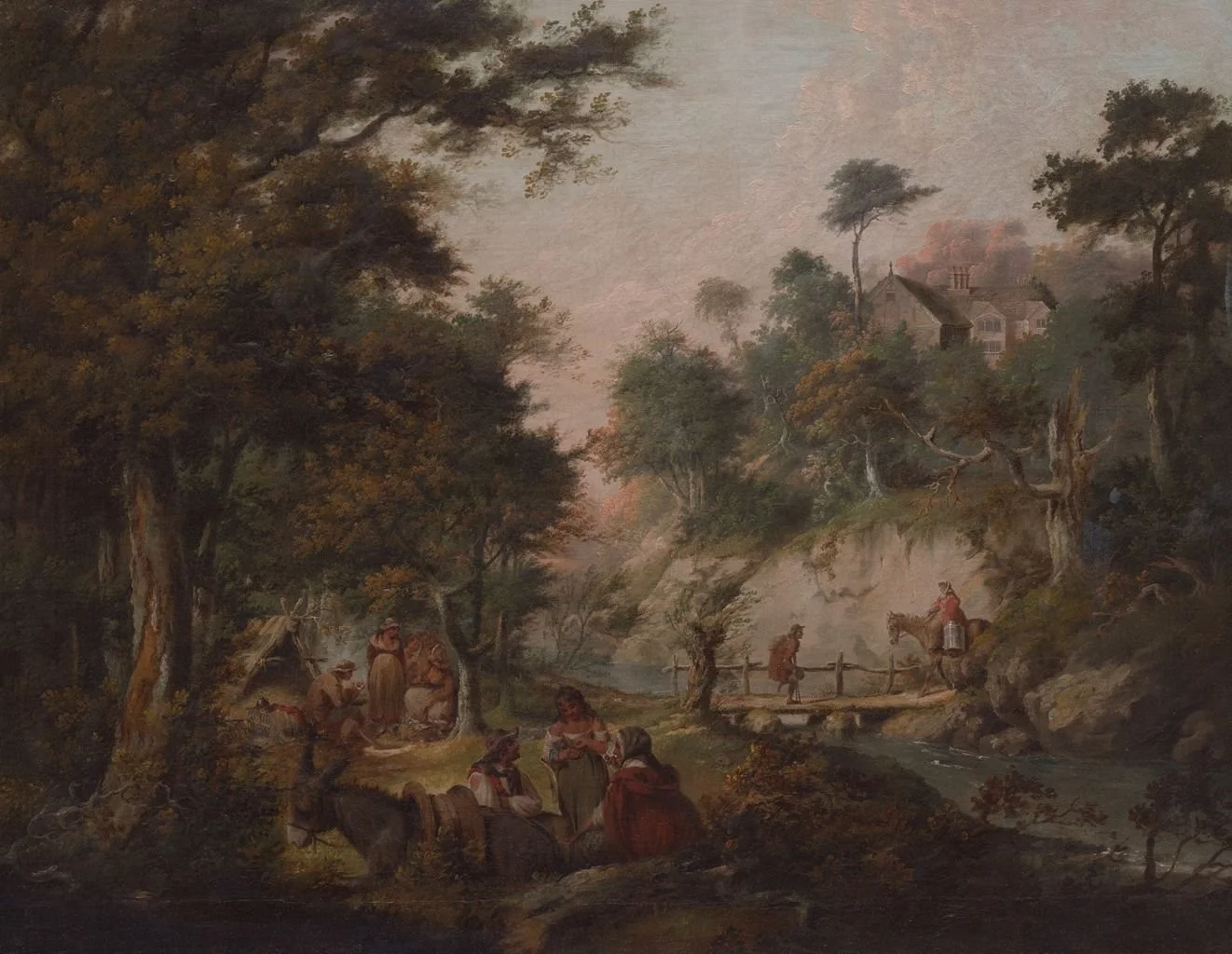
Francis Wheatley, born in London, England, 1747; active in England and Ireland; died in London, England, 1801, A Romany Encampment, ca. 1790, Oil on canvas, Yale Center for British Art, Gift of Elliot Sussman, MD, MBA, Yale BA 1973, B2017.27.
My research into the Romani people for this series has made it clear to me that this people group has a fairly complicated history, in which they’ve had to do a lot of things to survive.
They’re very good at surviving!
Despite centuries of nomadism across multiple continents (or maybe because of it) while facing constant mistrust and even outright violence from the peoples around them, they’ve managed to maintain a distinct identity, pride, faith, and even language.
The Romani have had to deal with attempts to expel, exterminate, or assimilate them everywhere they’ve gone. Along with the Jews, the Roma were nearly exterminated in Germany during the Holocaust. To this day, many Roma people in various places (especially in the UK and Europe) still have a very uneasy relationship with the countries where they reside.
While many people in real life treat the Roma with suspicion and distrust, seeing them as thieves, swindlers, and other unsavoury descriptors, they have an alternative, more romanticized reputation.
Begun in the highly romantic Victorian era and its ideals of being close to nature (and probably escalated by the Roma adopting colourful vardos, or caravans, as mobile homes in the middle of the nineteenth century) and fostered by their representation in fiction—especially fantasy books—this picture often paints the Roma as mysterious, alluring, and seductive.
While many Roma are not above using this image to their advantage when it suits (they’re survivors, remember), it can do as much harm in its way as the other stereotype.
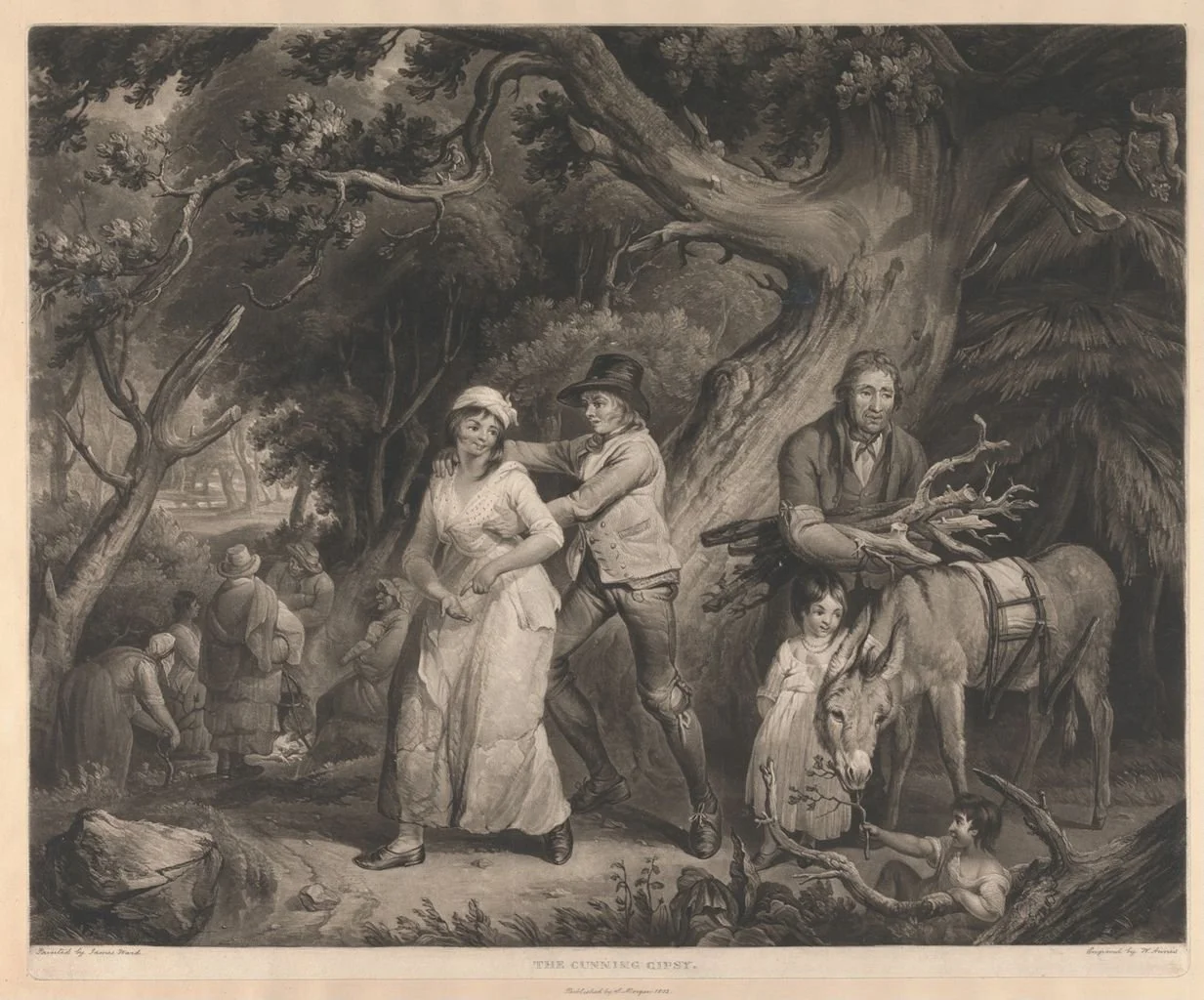
The title and contents of this print portray how white Europeans often saw Romani in the 19th century—cunning, sly, lascivious, and “uncivilized”—therefore, immoral. Only some of those things were true—or more true for Romani than their white neighbours. (Their cunning is one of their survival skills.)
William T. Annis, active 1798–1811, The Cunning Gypsy, 1802, Mezzotint, Yale Center for British Art, Paul Mellon Collection, B1977.14.14460.
I confess that when I first brought the Roma into my story, it was as someone ignorant of all these things. I was looking for a plot device to help a young Zale escape from a difficult situation his manifesting powers had created that would make him hard to find for the five year interim between that and the events of The Undine’s Tear.
One of my critique partners at the time, talented Regency romance author Jessica L. Jackson, kindly pointed out the harmful stereotypes I’d employed in the first draft of The Waterboy—which sent me down a rabbit hole of research and my story through a great deal of revision to try to address them.
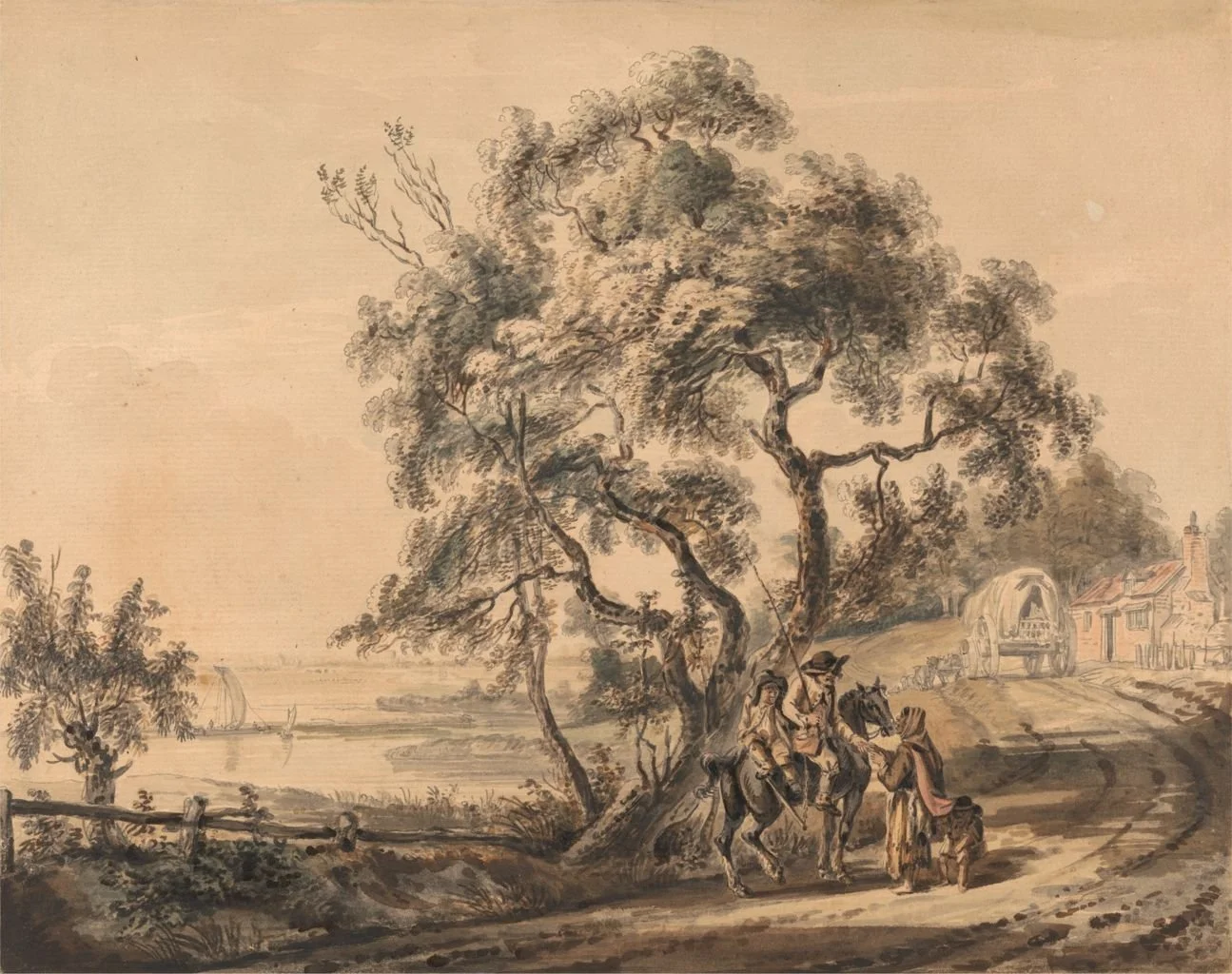
In The Waterboy, one of Zale’s Romani companions offers to tell his fortune—a “skill” many Romani would use to separate gorgios, or non-Romani people, from their money in a manner that would not cause ill will from their customers. Sometimes, they may even have believed what they told the gorgios. ;-)
Paul Sandby, 1731–1809, The Gypsy Fortune-Teller, ca. 1758, Watercolor and graphite with pen and black ink on medium, slightly textured, cream wove paper, Yale Center for British Art, Paul Mellon Collection, B1977.14.5950.
This is the reason I changed my original planned title from The Gypsy’s Secret to The Romani’s Curse—to prevent perpetuating the harmful representations of the Roma in my work, and to avoid using Gypsy in my title, which is considered a slur, especially in the UK.
However, as I’ve continued to develop this story, I felt using the word Romani in the title of Book 3 was still leaning into romanticizing their identity a bit more than their humanity. I also wanted the title to be more indicative of the conflict the story will contain. (And I really, really wanted only two syllables in the second word.)
So, I’m going to be calling this book The Healer’s Curse.
Hopefully, this will be the last title change for this volume. 🙂
Coming Soon
I just completed my quarterly week “off”. I put that in quotation marks, because I spent most of the week recovering from a cold, and I was also catching up on some freelance work when I had the brain cells to do so.
However, by Friday, I was also able to do the quarterly planning that is part of the point of having this week of rest. The slight break from routine and daily grind of running my business gives my brain the space to think about the goals I did or did not achieve in the previous quarter, and where I want to go next.
I’m thrilled that I actually accomplished almost everything I intended to in the last quarter.
I’m even more thrilled that, thanks to the pivots and shifts I’ve slowly been making this year, I’m finally free to focus more on producing fiction this winter.
One of the things I’ve learned about myself is that when I’m facing a lot of uncertainty, I struggle to be creative. Which is why I put so much of my time and energy this year into creating a more stable income base for my business.
Now that I’m seeing that start to pay off, my brain is free to dedicate itself to play again.
First up: drafting Every Rose that Blooms (Peace Country Romance Book 3).
Next: The Healer’s Curse (Rise of the Grigori Book 3).
Music Updates

“Help Me Find the Words” is streaming everywhere starting tomorrow (October 1).
Be sure to add it to your playlists!
Or you can listen, download, and support here.
Upcoming Book-Related Music
I’m working on two songs related to the Rise of the Grigori series—one of them is the lullaby that figures so prominently into the plot (mentioned in this post), and another is a rock anthem inspired by the main series protagonist, Calandra.
More info coming soon!
What do you think of my new title, The Healer’s Curse? Let me know in the comments!