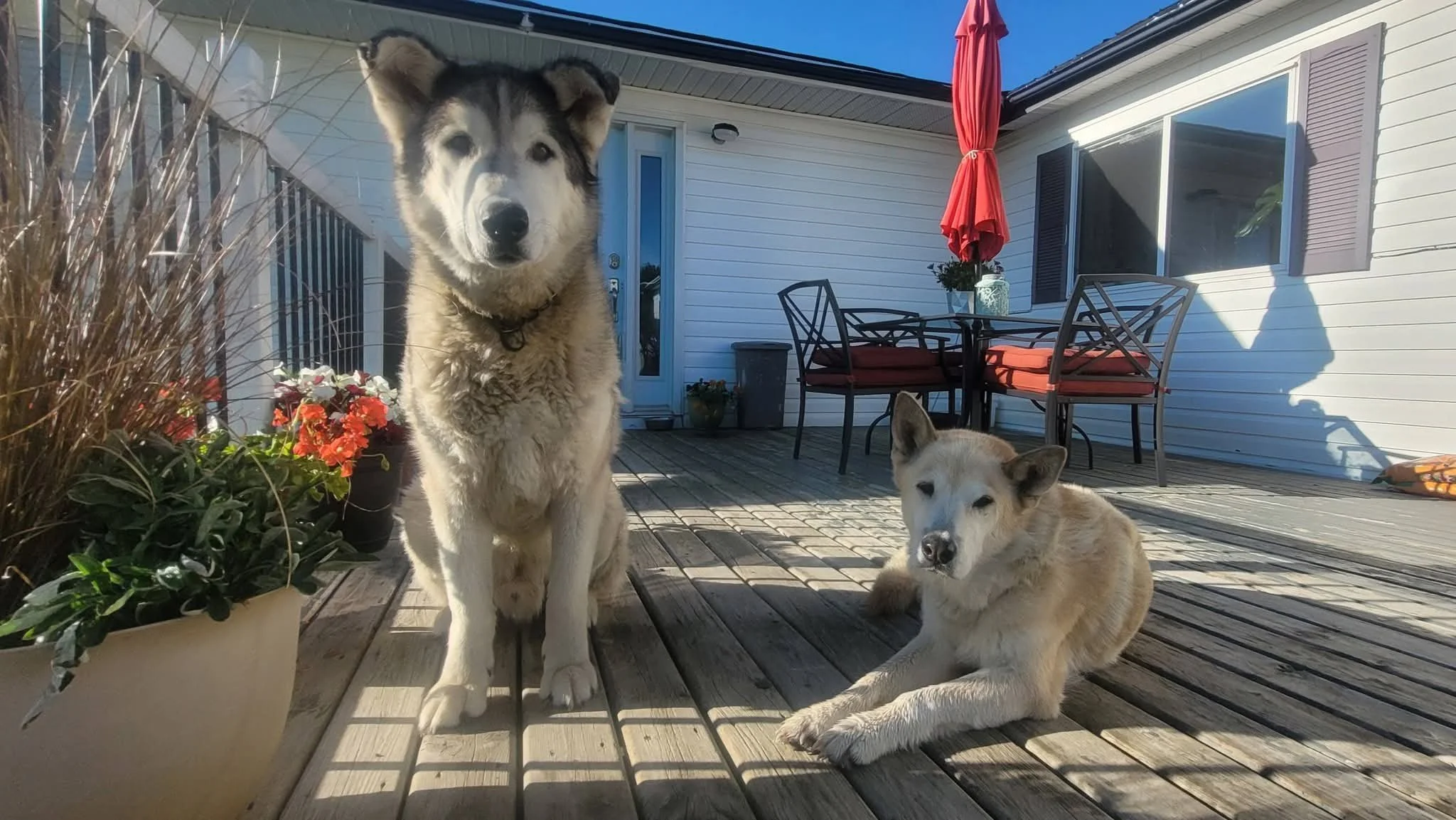
My conquering heroes. Photo by Colleen Hilman.
Last week, I had to run from a bear.
I was on my usual walk around my roughly 55-acre field, slogging along a trail that hadn’t been mowed for some time but that was still significantly shorter than the rest of the grass, wildflowers, and shrubs that fill the rest of it. I was at about the halfway point, where the back of the field is separated from some train tracks by a decent stretch of aspen and evergreen trees, which my path partially cuts through, when a strange half-squeal, half-roar on my left made me snap my head around. Through the tree trunks, I saw a blur of blond dog fur from my compact Husky/Shepherd cross, Daisy, chasing a streak of black in the same direction I was walking.
I didn’t wait to find out more. I took off running cross-country—away from the bear and toward the house—hoping to get far enough away from the dense trees while the dogs had the creature distracted that it didn’t have much interest in chasing me. When I looked back over my shoulder the first time, I saw my other dog, a large Husky, and the bear (my fear-addled brain doesn’t remember who was chasing who) barrelling back along the path toward the spot I’d just vacated. I did note that the bear was somewhat larger than Hiro, though it’s difficult to tell by how much when they’re both in a full run, and I wasn’t exactly taking a long look to gather data.
I continued to run as fast as my middle-aged legs could take me, and eventually, the distant sounds of dogs and bear could no longer be heard over my ragged breathing. When I felt like I might die from lack of oxygen instead of a bear attack, and having seen nor heard any sign of dogs nor bear for some time, I stopped and caught my breath.
The quickest way back to the house was still through my overgrown meadow, so I picked my way through—avoiding stands of trees as much as possible. When I got back to the house, exhausted and still breathing hard, the dogs were laying on the deck, tongues, lolling, as though nothing had even happened! They obviously took the nice path home—or a different route than me, at any rate.
I learned two things that day:
It’s time to start carrying bear spray on my walks.
If I ever want to survive the apocalypse, I need to start doing more cardio.
Black bears are fairly common around this area, since we live basically tucked into a forest in a sparsely populated area of the world, but I usually see them either at a distance or in a ditch as I drive by. In seventeen years living and walking on this property, the closest I’ve been before is happening upon scat. My eldest and one of his friends did have a close encounter in the trees near our house not long after we plopped it on this patch of virgin land, before the local wildlife had gotten the notice about their new human neighbours. The boys were seven. They did have a dog with them, and hid until the dog had chased the bear off.
That’s the reason I have two large dogs. And now, bear spray.
And maybe why my eldest is now so seemingly fearless…
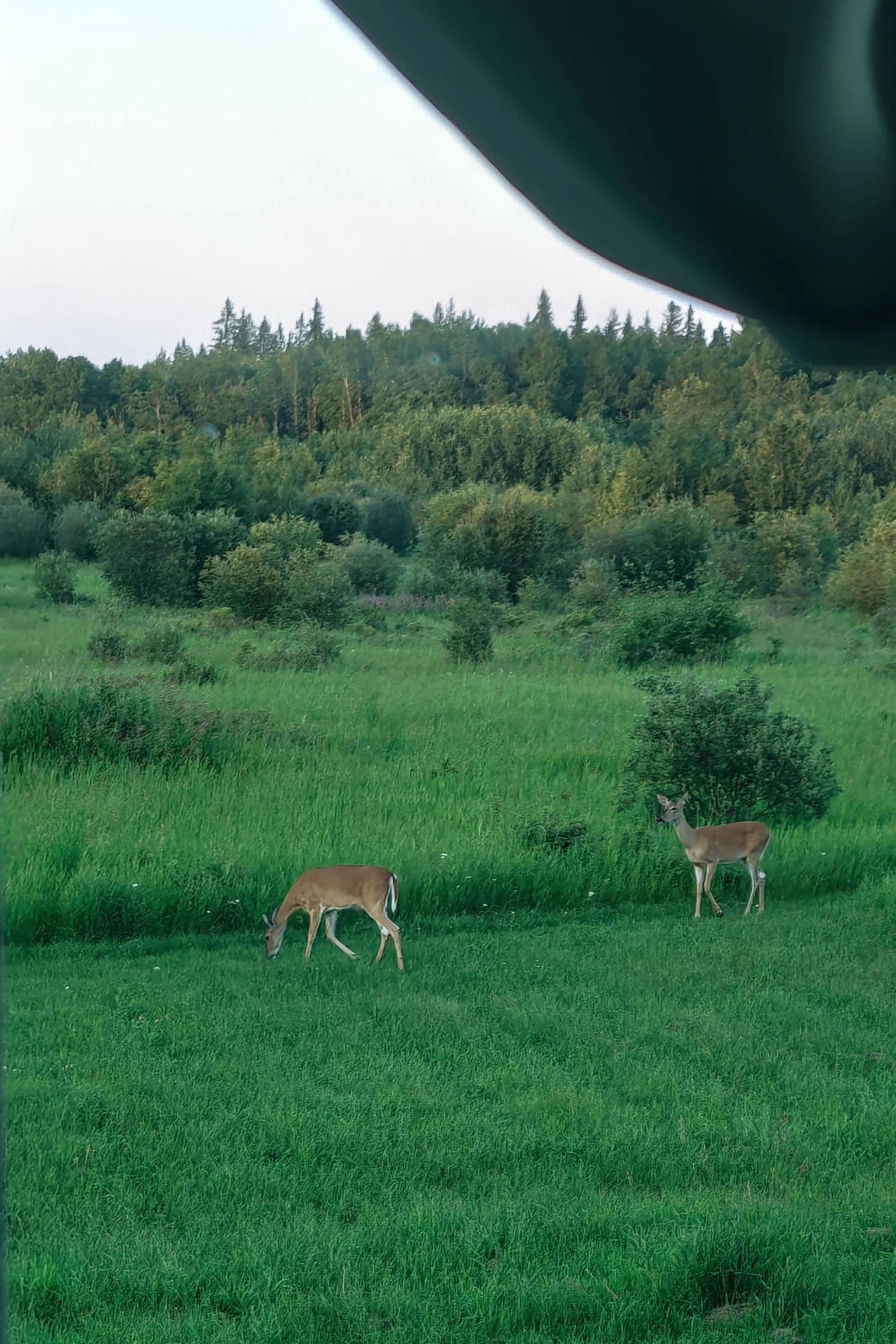
I was too busy fleeing for my life to photograph the bear, but here are two fearless deer captured through my window from earlier in the summer. This is also the approximate flight path I took from the vicinity of those trees in the distance.
I’ve officially got ADHD (and it has changed everything)
While running from a bear was certainly the most exciting story to share from my recent past, last week marked another significant moment—a shift that has made a huge difference in my mental health and creativity.
Two weeks ago, I finally got assessed for and diagnosed with ADHD. If you’ve followed me for a while, you’ll remember that I realized a couple of years ago that I most likely had combined-type ADHD after my second-born was diagnosed and, hearing how very heritable the condition is, my husband and I started looking into it for ourselves.
I was a little shaken up at the time, since I had most of the symptoms for both the inattentive and hyperactive-impulsive types (confirmed by my recent diagnosis)—but that was mostly because I knew almost nothing about ADHD back then. (For instance, it’s more of a difference than a disorder, despite what the final “D” stands for.)
After the discovery, there was a whole process of reintegrating a lifetime of experiences that were influenced by having had this difference and not knowing it and learning ways to mitigate ADHD-related struggles. While learning more about ADHD certainly helped me to better understand myself and some people in my family (highly heritable, remember? Pretty sure I got it from both sides, and another one of my kiddos likely has it too), and also how to better support my ADHD kids, there’s also grief for having struggled for so long without support for myself or for my adult children.
Despite that, I figured I didn’t really need to pursue an official diagnosis at age forty-seven. Yes, I’d struggled a lot, but I had created a lot of systems to help me already and figured the only other thing a diagnosis could offer (besides official confirmation of what I already knew to be true) was medication. And I was pretty hesitant to try meds, since I’m generally pharmaceutical-avoidant.
Then I saw the difference meds were making for my diagnosed son. And I kept researching, and watching testimonials from adults—especially late-diagnosed adult women like me—who had tried meds, and who had found them to be life-changing. For two years, I kept pondering whether this was a solution I needed or wanted.
Meanwhile, my symptoms intensified, and I slowly watched my capacity to do my work dwindle.
ADHD, late diagnosis, and the slow death of my creativity
In the past several years, I’ve either had to give up or struggled to continue doing pretty much everything being an independent author and freelancer relies on.
I gave up developmental editing, with its months-long projects and high client expectations, and switched to the low-lift, quickly finished and oft-varied tasks of being an administrative assistant instead.
Even still, I’ve had to rely on AI assistance a great deal at times—as a conversation partner to help me clarify thoughts and ideas while doing creative work (or trying to remember simple words) and as a stop-gap junior copywriter when I was too exhausted or brain-fog-locked to keep up with my marketing schedule. I even tried it for drafting fiction. That went poorly—I haven’t found a way to use AI for fiction-writing that works for my brain and the way I write stories. My process is very much a thinking-through-my-fingers sort of thing, and using AI to draft breaks it. So that was out.
However, I was becoming desperate. After publishing Every Bell that Rings in late 2024, a project that took way longer than I felt it should have (two years for 75k words), I began struggling even more with writing fiction. I no longer really had the desire, and ideas that once flowed like water seemed locked in a glacier, out of reach.
I wanted to want to write, but mostly because I wanted to have the completed projects under my belt, not because I wanted to engage in the process anymore or craved the challenge of completing the project. Looking back, I think it’s because the process had become so frustrating, often resulting in very little usable progress, and the ability to think with clarity about a plot thread to develop it more fully had dwindled to a trickle on my good days.
Nonfiction blog posts I could usually manage. But the ability to weave worlds from thin air felt out of reach, like a source of magic that can be seen from a distance, but not touched.
There have been times (like, most of the time) over the past six years that I feared I would never be able to finish my epic mermaid fantasy Rise of the Grigori series. Besides being long, those books are extremely complicated. I doubted I had the capacity to plot out and write something of that complexity anymore, especially when I was struggling so much to write a simple two-POV romance novel that was a fraction of the length of one of my fantasy books.
That was why my return to songwriting in April 2025 was such a blessing—I could still create, still work out my thoughts and feelings in an art form I enjoy, and still use my skills to bless others on projects that were short enough to be achievable and challenging enough to be interesting.
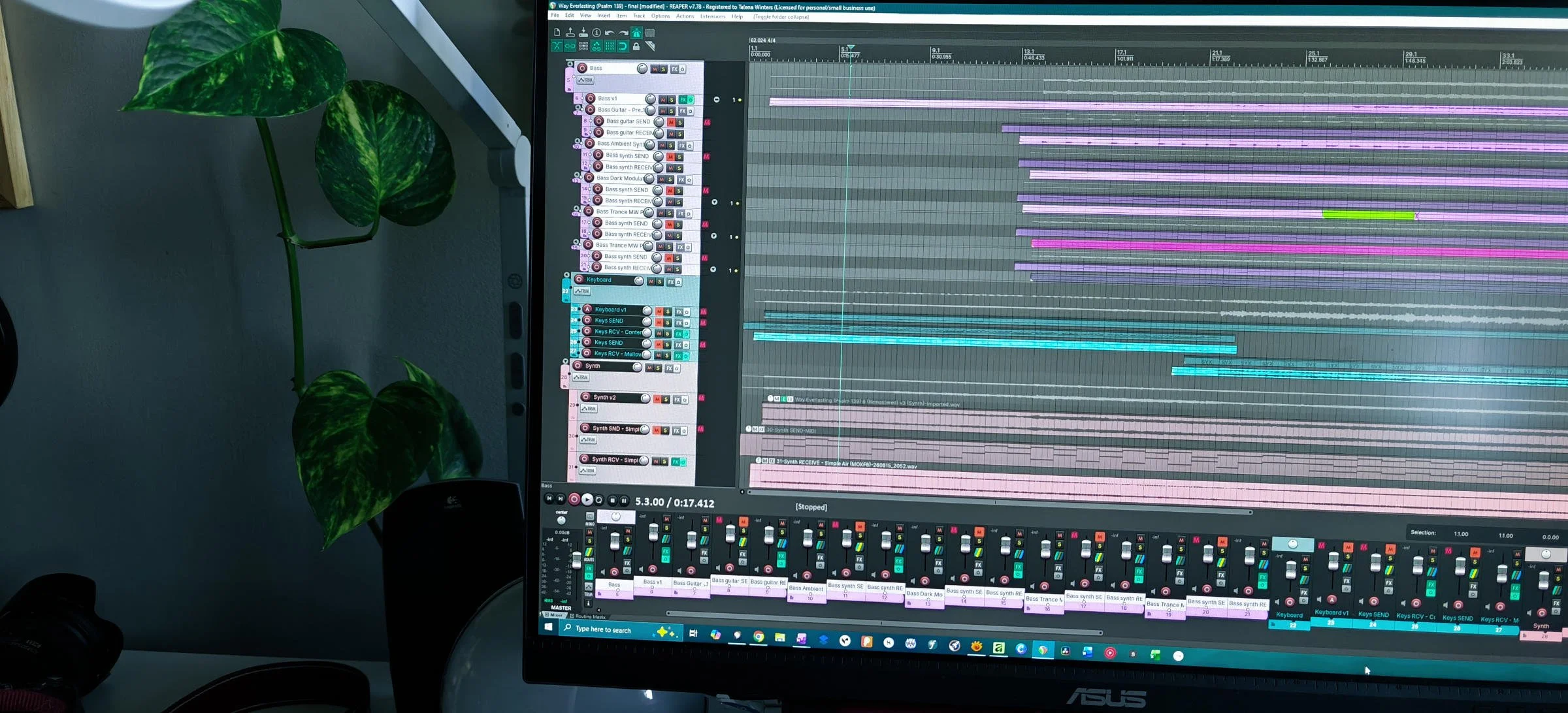
I’m not only songwriting but producing my own tracks. It’s been an extremely satisfying journey so far.
Still, with every passing month, I was losing more confidence in my ability to do the work I’d built my career on—writing, editing, designing knitting patterns (which I’ve also stopped doing), and generally being creative. Perimenopause kept ticking on, dropping more and more health bombs on me as time passed. I felt myself contracting, grieving who I used to be and energy and abilities it seemed I’d never again possess, despite the gains I’d made with my naturopath on my health journey.
The final straw was a job offer I received several weeks ago. It was from one of my favourite clients for work I really enjoy doing, and it would have been a significant boost to my often-threadbare bottom line. On paper, I should have been able to commit the required number of hours to do it, even if it would have been a bit of a stretch. But… I was already struggling to fulfill my existing committed hours.
Turning down that job was really hard, and it made me stop and examine why I had to. That’s when I realized that one of the most deleterious impediments ADHD presents to me is task initiation.
A lot of the reason I’d stepped back from many of the things I did was because of the anxiety and distress I had to overcome just to start doing the Thing, even if it was something I enjoyed doing. Once I started, I usually did okay and could focus on the task until it was complete. But for any task requiring medium to high levels of brain power, I could procrastinate on trivialities for hours before finally forcing myself to tackle it. And when I did finally start The Thing (which was probably one of only several capital-T Things I’d intended to do that day), it was usually so late in the day that I no longer had time left to do other Things.
Thus all the lost hours in a week that still somehow seemed full to the brim. And my creative work time was always the first Thing to be kicked off the list.
Do I have superpowers now?
Last Monday, that changed. It was my first day on ADHD medication. I remember thinking that morning before they kicked in—kind of laughing at myself—“I think my expectations are too high. I want these meds to give me superpowers, or the cognitive equivalent.” Of course, I knew that was impossible.
But that night, looking back on the day I’d had, it didn’t seem so impossible anymore. I’d spent the day writing last week’s massive 6,000-word blog post, which involved connecting and writing out some very complex ideas—without the use of AI as a thinking partner. I was in a fantastic mood, which is a huge win on its own. And I still had energy and mental capacity to spare.
There were smaller things, too—like not feeling the need to fill every spare second (bathroom breaks, waiting for apps to load, etc.) with dopamine hits from my phone. Or being able to ignore distractions and stay focused on my task, even when the task required a lot of thought. Being able to prioritize better. And not spending the first half of my day on things that could easily be left undone.
As the week went on, so did the miracles. After finishing that blog post, which I’d been putting off for weeks, I tackled another project that had been slipping off the bottom of my list—compiling narrator notes for the massive cast of my Rise of the Grigori series. (Only a few more hours to go, and that one’s done.) On the weekend, I tackled a bunch of small tasks that I would normally let slide (again). And I engaged socially as my old self, not a weary shell of the person I used to be.
This treatment has been literally life-changing, and, as I write this, I’m only on Day Eight.
But the most important thing it has offered me is hope.
Hope that I can continue to be a novelist—to tell the stories I’ve been given to tell, and change the lives those stories are meant to change.
Hope that the future will contain more good days than bad.
Hope that I can dream again, and fulfill the purposes God put me on this earth to accomplish.
Mermaids are back on the schedule, kids
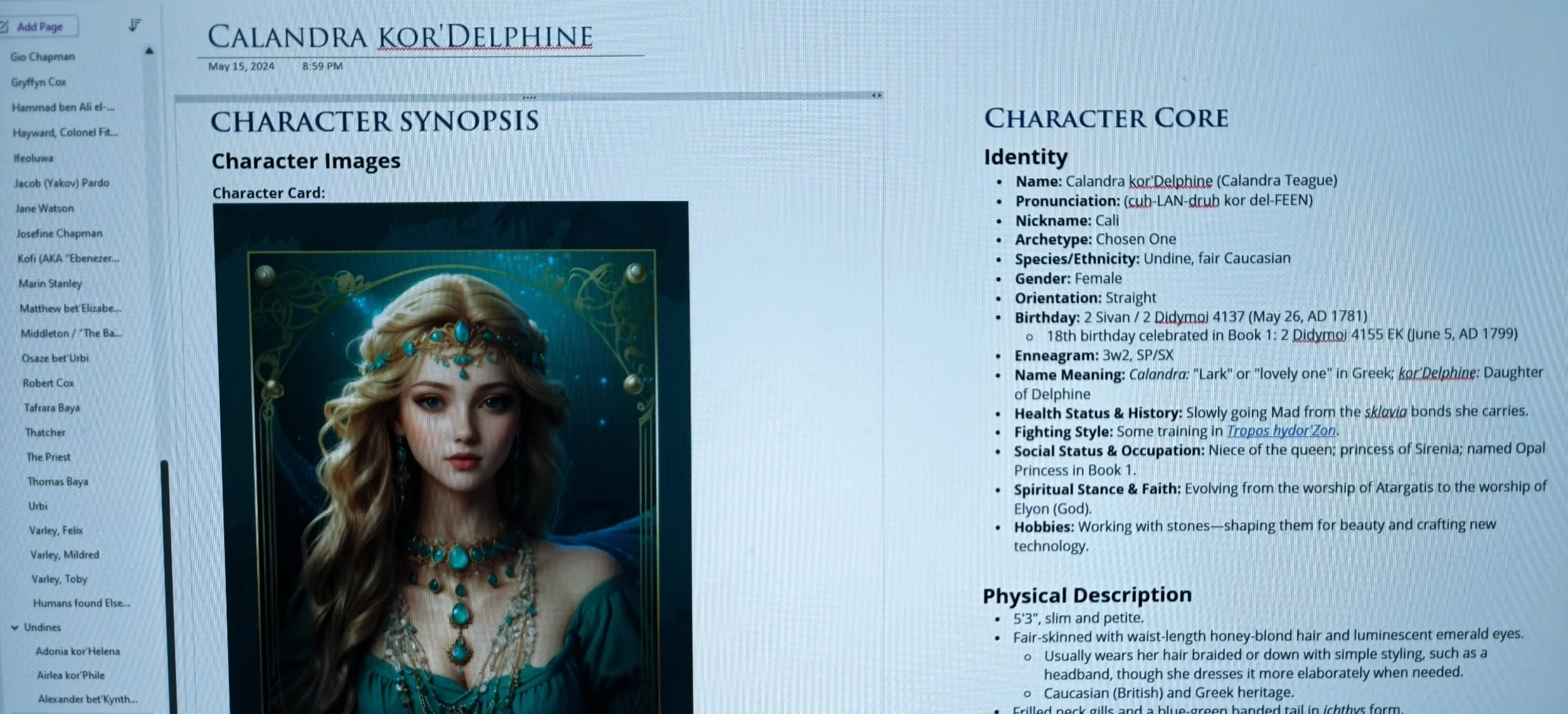
While creating character notes, I’ve also been organizing my chaotic and messy 16-year-old story bible. It’s starting to look so pretty!
After three days of diving back into the world of the Grigori last week, becoming reacquainted with my characters and the world and the reasons I started writing that story in the first place, ideas are sparking, and I’m now itching to write it. I haven’t figured out how soon that will happen (but it’ll be soon!), as I also need to complete my current WIP or it will be hanging over my head until it’s done. Besides, I now find myself caring about not just finishing my romance novel, but caring about the project and story itself. (FYI, that’s a big deal.)
I plan to spend some time thinking about that over the next week or two, along with other changes I can make to adjust for the ways my energy has suddenly shifted.
This whole thing is new, and I’m not sure how much to trust my energy or abilities. But as I move forward, I will be testing what my new boundaries actually are, starting with prioritizing my creative writing again. I also have several songs-in-progress, collaborations with talented vocalists. Music remains my side passion project, but watch for news of those releases as I have time to complete them.
I’m just thrilled that my primary creative platform—my fiction—is once again my primary passion project.
Exciting things this way come, my friend.
Have you had a late diagnosis, or suspected one? I’d love to hear how it changed things for you. Tell me in the comments!
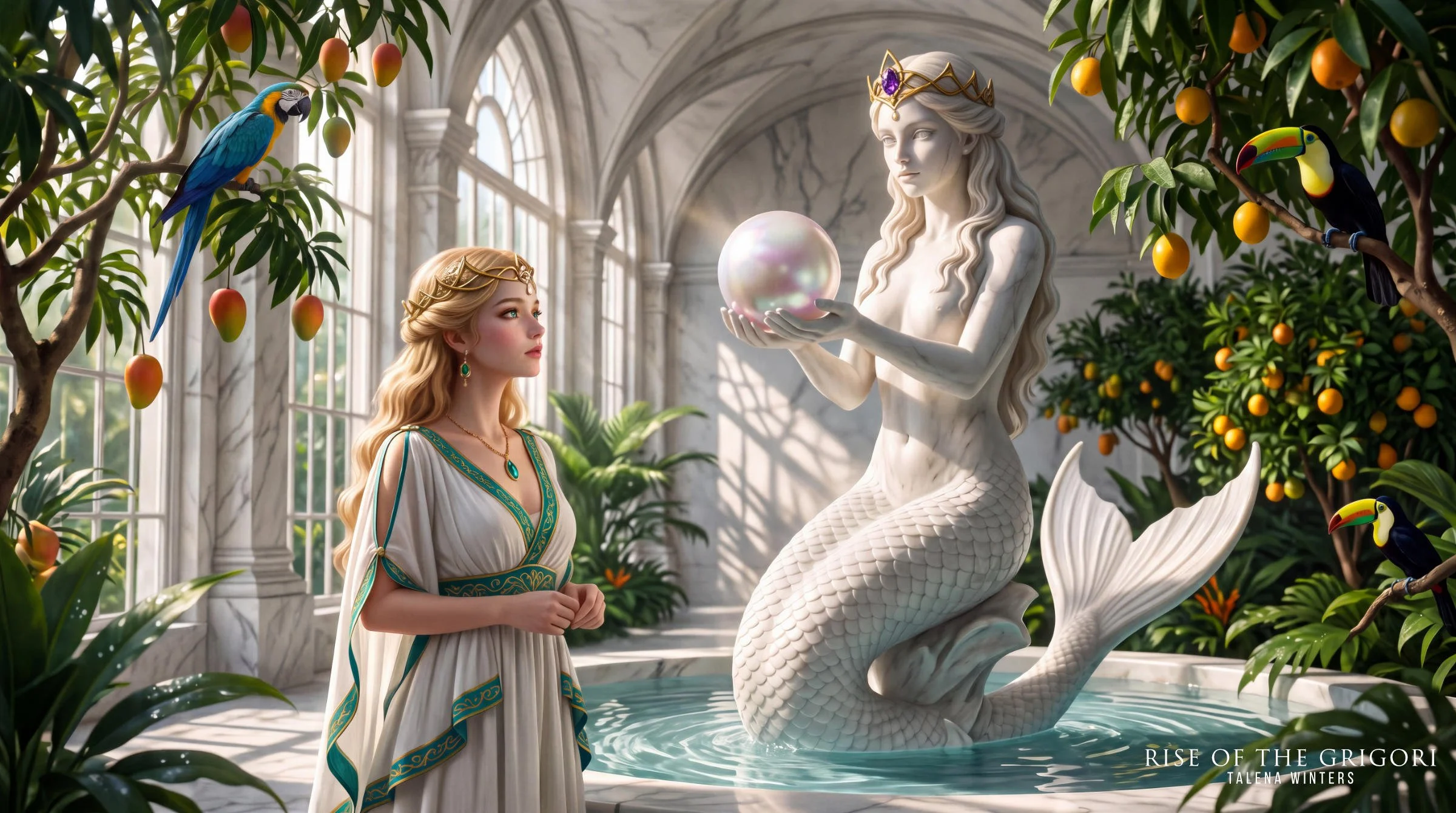
A piece of art inspired by my Rise of the Grigori series heroine, Calandra, that I made while playing around last week.