All Art Is Human Art, Part 3: Support, Not Segregation
Since I started writing this series, there have been some monumental changes in how platforms such as Substack, Spotify, Claude, Suno, and more identify and restrict creators, especially AI-assisted ones. Frankly, I’m a little exhausted with the conversation, and I almost didn’t finish and publish this. But I decided to go ahead, because I’m a completionist, and I promised.
In Part 1, I argued that the human in the loop is responsible—there is no such thing as an “AI artist”, because bots don’t create. There are only AI-assisted human artists. The AI is only a tool, and the human is responsible for how they use it, same as with any other tool.
In Part 2, I reminded all of us that, after the act of creation is complete, the value of art is in the eye of the beholder. The actual effort that went into creating it has almost nothing to do with how much a consumer will pay. If they value it, then the art is something that can and should provide monetary value to the creator, regardless of how it was made or how long it took. But the consumer decides the value.
Now for Part 3. I was originally going to expand on the point that I started in Part 2, that in a creative economy where the creator is paid based on streams from a pool of money that represents audience attention, all creators should be paid equally, regardless of whether they used AI as a tool. But so far, the trend isn’t toward paying AI-assisted creators less; it’s in suppressing AI-assisted art from reaching an audience in the first place.
Spotify has just announced they’ll prevent AI-assisted songs from being allowed on editorial or algorithmic playlists. And tech platforms in general are moving toward forced public disclosure of AI assistance in the creation of the work.
These changes have helped me clarify why I started writing this series in the first place. Because this is the same problem as unequal payment in a different guise—one that’s not only unfair to AI-assisted creators, but potentially dangerous, depending on how it’s being implemented.
Here’s the TL;DR of this essay series:
Involuntary AI labelling hurts both AI-assisted and unassisted creators.
Why?
It encourages division and segregation, when what creators need, more than anything, is support and encouragement. It’s perpetuating witch hunts and ruining careers over a purity test about using a technology that is not only completely legal, but has, in a few short years, been a force multiplier for humanity in a wide range of fields. It’s hurting people who need AI as assistive technology. And it’s perpetuating the idea that AI assistance is something that should be othered and repressed in the arts instead of normalizing it as a technology to empower human creativity. In other words, it perpetuates unnecessary stigma.
I believe there is a place for AI labelling and detection, and I’ll get to what those uses are at the end of this article. But the arts aren’t it. Here’s why.
AI detectors are inaccurate and misleading
A few weeks ago, Substack deployed a plugin on their platform that allows any piece of text over 100 words to be scanned by an AI detection tool called Pangram, which comes back with a score that looks like “##% AI”.
Pangram is the same tool that was used as evidence behind several recently dropped publishing contracts, despite the authors’ denials of using AI in their process. On the podcast Hard Fork last week, Max Spero, the CEO of Pangram said that “if Pangram says something is AI, we can be very confident that it is largely AI-generated.”
Did you catch that? “We can be very confident” and “largely AI-generated”, not “the text was definitely AI-generated.”
Even when the tool comes back with 100% certainty, Pangram’s founder allows that it could be wrong.
Is that what a reader will see? No. They’ll see “this was written by a soulless robot.” And, since most people have no idea how inaccurate the tool can be and why, or how conscientious creators who do incorporate AI into their workflow to empower their own human creativity are actually using it, they’ll automatically trust the work less and will likely pass it by, even if it would have added value to their life.
AI labelling isn’t new, but doing so without the creator’s consent is. And, in the current environment in the arts, it can be dangerous. At the extreme, anti-AI bullies will make the creator a target—filling their comments sections with hateful vitriol, review-bombing their books (which they’ve most likely never read), or, for the most unstable, doxxing them and their families or sending them death threats—as happened to author Coral Hart after she was profiled in the New York Times for her AI-assisted novel-writing process. Evil knows no boundaries.
(Spero himself didn’t seem to see the slight possibility of error he acknowledges with his language as a non-valid reason to label a piece of work 100% AI even if it’s not. Evidence, to me, that he spends very little time in creative circles or that he has no problem needlessly ruining livelihoods—and lives.)
The problem is, even a very high AI-use probability score from Pangram can be 100% wrong. And even if it’s not, it can’t detect anything but the way the text is arranged, not the intent behind it.
So humans who spent hours pouring their own hard-earned creativity and thought into a post are suddenly dismissed as robots, whether or not they actually used a chatbot to help them. You could have used AI to write a draft based on your own ideas that you then edited yourself, or used it to do nothing but copyedit, or scraped the internet with an AI agent and had a chatbot draft a post based on other people’s ideas that you barely glanced at before publishing (along with the other thousand articles your content farm will write today). Or you could have written every word yourself. In any of these situations, your work could be labelled AI-written with 100% confidence.
But introducing a few spelling and grammatical errors can take AI-drafted text to a 100% human score. (I’ve tested this one myself, because science. A single missing word tipped a passage from 100% AI-written to 100% human-written. It was actually a mix of both.)
If it’s that easy to fool the detector, what’s the point? Especially if it means the writing we’ll read is objectively worse due to purposely introduced errors—mistakes designed to fool a detector whose purpose is to find patterns used by a machine that learned from human writing?
Anecdotally, I’ve seen dozens of people reporting this fallibility going both directions since it went live on Substack several weeks ago—people whose 100% human-written work was flagged as 100% AI, and people whose 100% AI-written work was flagged as 100% human, and a broad spectrum between.
I’m not concerned about the tool flagging AI work as human—as Spero said, they want to bias in that direction so as not to wrongly “accuse” a creator of using AI when they didn’t. Evidently, even Spero realizes that his tool’s outputs have real human consequences.
Because a 100% human-written article that’s flagged as 80% likelihood that AI was used doesn’t make a reader go “oh, this person’s writing style is 80% similar to the work that AI chatbots were trained on,” or “there’s an 80% chance that this article had AI assistance with the drafting, but 20% that no AI was used,” but “80% of this article was written using a chatbot.”
Or, more realistically, “80% AI? Slop!”
The stigma around AI tools has been perpetuated before the consumer ever read a word.
While I tend to attribute good intentions to people, we know that path often leads to unintended negative consequences. Max Spero probably thinks he’s doing the Lord’s work—and if he were only selling his tool to companies aiming to catch bad actors exploiting people, I’d agree. But he’s not. In fact, I’d argue that using the Pangram detector on creative work is completely unnecessary when it comes to creating a better internet for humans, and it’s causing more harm than good.
Pangram isn’t the only problem, though. The crowd-funding platform Kickstarter, which requires AI disclosure when used in campaigns, uses their own AI tool to scan campaign applications and materials such as text and images. It may be fairly accurate, but it isn’t always right. Again, this has human consequences.
In one case I recently saw, Kickstarter insisted that an author’s character art was created with AI when it wasn’t. A support representative actually told her to claim AI use when she had proof that the work was human-created, then say in the disclaimer box that it was human-created and explain her illustrator’s process.
For an author who values hiring and supporting unassisted creators for their campaigns, and who may detest AI use on principle, having to check the “AI was used in this campaign” box would be like chopping off a finger, and could open them up to targeting by the aforementioned bullies. Kickstarter’s detection software may be correct most of the time, but that still leaves a margin for error which can unintentionally harm creators.
Eventually, this author was able to contact a human with more pull inside the company and get the flag dismissed, but not without a lot of distress and wasted time first. While I believe Kickstarter also has good intentions behind their new system, those intentions are currently taking the broad road downward by implementing completely unnecessary labels.
Label the campaign images as AI-generated? Check. Those could be used to dupe people out of money by presenting products that don’t exist.
Label the actual image products being offered in the campaign? Why? The image exists and can be distributed. If the creator or illustrator wants to disclose AI use as part of their process, great. But if they don’t, who is harmed?
This is a problem. As writer Elizabeth Ann West says, “AI labels are anti-human.” She made that statement after Pangram gave three of her fully AI-assisted novels a “100% human” score. (In that linked interview, she goes on to highlight the corporate interests behind the current trend of AI labelling on Substack using Pangram specifically, as well as behind the first publishing deal that fell through due to alleged AI use for Mia Ballard’s book Shy Girl. Worth a watch. Don’t know the story? This video from The Drey Dossier explains what happened.)
Recent changes made by AI generators such as Gemini, Claude, and Suno to watermark outputs will make AI detection more accurate. And people using these tools responsibly are getting caught in the crossfire.
Music streaming platforms will soon be able to mark any song with a trace of a Suno watermark (being implemented September 3) or other likely AI indicators as “AI music”—even if the producer used the generator for a single stem in a mix that includes hundreds of human voices and instrument tracks.
Using basic photo retouching and editing tools in Canva or even your phone can add an “AI” label to the metadata that has triggered flags on Kickstarter, Facebook, and more.
“They claim they want to ‘protect and highlight human artists’—as if the artists creating AI-assisted music aren’t human.”
Whether AI use was voluntarily disclosed or detected, Spotify recently announced it won’t include AI-assisted songs in algorithmic playlists unless the creator does extra work to drive traffic to it and prove people want to hear it. AI-assisted songs are banned from inclusion in editorial playlists—tools that can make a huge difference in helping new listeners find your music. They claim they want to “protect and highlight human artists”—as if the artists creating AI-assisted music aren’t human.
And simply being accused of AI use is enough to have a $2.4 million publishing contract evaporate into thin air, as Nigerian author Jerry Falade so recently found out. A book that sparked a massive and practically unheard-of bidding war for a debut author was instantly tainted by an accusation that can’t be proven wrong. (Though this likely had less to do with stigma and more to do with current copyright law, as I’ll discuss below.)
The problem is, even a tool that is 100% accurate at detecting whether AI touched a particular piece of work still lacks the ability to measure how human the work is—how much human skill, thought, and intention went into the piece. Whether it was the result of a lived experience or a simple prompt asking a robot to generate a lived experience that never happened. And whether the tool was used intentionally to enhance and empower the expression of human emotions and ideas, or used as a way to exploit systems and people for a quick buck.
But that’s only the first problem with AI labelling.
“The problem is, even a tool that is 100% accurate at detecting whether AI touched a particular piece of work still lacks the ability to measure how human the work is—how much human skill, thought, and intention went into the piece.”
AI labels marginalize already-disadvantaged people
It has been well documented that work written by English as a Second Language (ESL) speakers receives a higher number of false positives in AI detectors—61%, according to a 2023 Stanford study.
This problem also extends to neurodivergent writers. Anecdotal evidence such as this professor’s Reddit post about checkers flagging only neurodivergent students and the Bloomberg article cited by Amanda Hirsch in this 2024 article indicate that students with ADHD, autism, and dyslexia get flagged as using AI at much higher rates than neurotypicals—whether they were or not. This is why universities are turning off AI detection tools. Educators are even finding ways to use AI to help neurodiverse students in the classroom.
Which is a perfect use case for AI tools. The truth is, AI is an assistive technology for anyone with cognitive difficulties. Whether brain fog from perimenopause or long COVID, difficulty organizing or communicating ideas from ADHD, autism, dyslexia, or any other neurological difference, AI does for them what a wheelchair or crutch does for someone with mobility issues—it gives them access. It levels the playing field (at least somewhat) with colleagues who don’t struggle with these differences. And prohibiting the use of tools that assist someone with a disability is not only cruel, but illegal in many countries, including Canada, the UK, and the United States.
Despite the ways AI tools are helping people with real, diagnosable cognitive differences, there are more and more creative spaces that seem determined to “catch out” and exclude AI-assisted users with no nuance as to why they use AI, how they use it, or whether it can be proven that AI was used at all (or determining why it matters).
Writing conferences, literary magazines, writing contests, group promotions, and online author groups have banned authors accused of using AI—sometimes in any part of their process, such as creating advertising copy and images or as a research tool, not just drafting their books.
For example, a recent statement put out by RARE London, a romance reader and author event, banned “any use of AI” for its authors, bragged about uninviting an author accused of using AI (so, banned for engaging in a perfectly legal activity), and actively encouraged people to report authors they suspected of AI use (reported by James Blatch on Substack). This followed the unintentionally ironic opener of “This is supposed to be a safe space for all” and an entire page of their event explainer website dedicated to disability accommodations. (I’m not linking to them, because I don’t want to give them the link juice.)
In a recent Facebook post in a private author group, Nicole Kimber, founder of The Cherish Society (a website described as “a cozy corner for the chronically ill”), pointed out:
Under the Assistive Technology Act, off-the-shelf software that supports or maintains functional ability is already recognized as assistive technology. It doesn’t need an FDA label or a doctor’s prescription. It qualifies based on how it’s used.
So when a group issues a blanket ban on AI tools, they’re not just setting a content standard. They’re excluding disabled writers who need that software to participate at all. That’s a discrimination problem under ADA Title III principles. Yes, Title III does refer to brick-and-mortar stores, since it was written in 1990, but some recent courts and the DOJ have stated that commercial websites and mobile apps qualify. And though social media platforms probably don’t fall under this rule, morally and ethically, it still applies.
And when they demand authors disclose what tools they used? They’re forcing disabled creators to either reveal private medical information to justify their accommodation or stay silent and get harassed. You wouldn’t demand someone tell you about their medical devices to enter a physical space. That’s not transparency. And forcing people to publicly label their adaptive tools is a form of forced speech that violates basic medical privacy. Free expression means having the right NOT to be forced to declare your private tools.
(Quoted with permission.)
Medical privacy protections exist because disclosure creates stigma, and stigma costs people jobs, housing, and community. We already decided, as a society, that forcing people to announce their accommodations causes harm. Forced AI disclosure asks disabled creators to do exactly the thing disability law was written to protect them from.
AI bans and forced AI disclosures are a lawsuit waiting to happen. It’s only a matter of time.
All of the current anti-AI bias, rooted in what I believe is fear in various guises, doesn’t take into account that these technologies have made real, verifiable differences in the lives of cognitively disabled people (and also physically disabled ones, such as the Respeecher tool allowing people to speak). People who have been forced to give up creative careers due to disability have been finding their voices again with the help of generative and assistive AI tools.
As one of those people (I got my official ADHD diagnosis last week), I can personally vouch for that.
If LLMs hadn’t shown up when they did, the brain fog, perimenopause rollercoaster, personal trauma, and ever-escalating symptoms of my undiagnosed, unmedicated ADHD over the past five years would probably have made me quit writing altogether. As it was, I did quit developmental editing—I could no longer handle the pressure and overwhelm of big months-long projects and worrying that I would be unable to organize my thoughts and feedback in a way that would help authors, even with AI assistance.
On the music side, AI music generators like Suno lowered barriers and opened doors back into my original dream of professional songwriting, which wouldn’t have happened otherwise.
I’ve spent a lifetime developing the crafts of writing and composition, and my awards and reviews prove it—but even still, without AI, I might now be working the checkout at my local grocery store.
This post is the first long, thought-provoking essay I’ve written largely without AI assistance of any kind in years. I used AI extensively in Parts 1 and 2 to organize my thoughts and arrange my own words when I just couldn’t manage it—and it still took me around eight hours per post and left me completely exhausted and useless. This post, for which I only used AI to give feedback on the final draft and to find some of the sources I wanted to cite, took ten hours—only two hours longer for a substantially longer and more involved piece of work, without the same physical and mental drain. This shift is only possible thanks to my new ADHD meds—another medical assistive tool that no one should be required to disclose in order to create and publish their work.
I hate that I need assistance in order to do what used to be much easier—but I’d rather that than having to give up creating altogether. Thanks to medication, I’m finally looking forward to finishing my current work in progress—an “easy” romance novel I’ve barely worked on for almost two years—and tackling the next massive, complicated 300k-word book in my epic mermaid fantasy series. (Thank you to my Books and Tea League members who have stuck with me anyway, despite long gaps in the release schedule.)
The stigma around AI is at least partially to blame for why my brain won’t let me use it to write novels—and look where that’s gotten me. I’m publishing at a snail’s pace, even for me. Medication, which no one thinks it’s okay to ban me for (at least, not in my country) or that won’t require me to defend my own copyright, will finally shovel in the holes I didn’t dare use AI to fill.
While I focused on AI as an assistive technology for those with disabilities in this section, it’s also enabling low-income creators to achieve things they never could without it. Any creative career requires a high price in both time and money—learning the craft, learning to market, purchasing the tools to create with, purchasing services, marketing, etc. AI tools can bring the cost of both down substantially while improving the creator’s product sooner, and it’s empowering a whole new wave of creators to enter the industry.
This terrifies some established creators, and I believe that fear is behind a lot of the gatekeeping and bullying we’re seeing.
The truth is, every new technology makes some things easier so we can spend our finite effort and attention on the things that are still hard. And every single one of us is enabled by technology, disability or not.
From the clothes we don’t have to make ourselves to the food we don’t have to grow (or even prepare) to the knowledge we no longer have to hunt down in physical books at the library, technology that has been compounding for our benefit since the dawn of humanity is why we even have the time to consider spending a career in the arts without the old-school apprenticeship and patronage system.
As Ella Barnard said in her Substack post “My Books Trained AI. Then My Community Shut Down My Class About It.”, “The loudest narratives can only see the visible workers being displaced; they completely miss the quiet, distributed creative workers who wouldn’t exist without this infrastructure. … The way we talk about AI has real, painful effects on real people in struggling communities—people you would want to support if you knew their stories.”
It can be easy to forget that other people are struggling with different things than you. And who are you to say what tools they should and should not be allowed to use to help them?
“Every new technology makes some things easier so we can spend our finite effort and attention on the things that are still hard. And every single one of us is enabled by technology, disability or not. ”
AI stigma and copyright law
As mentioned earlier, current copyright laws (or lack thereof) in many countries, including the USA, prevent copyrighting AI outputs. The UK and a handful of other countries come closest to allowing the human behind the output to claim copyright, but most other countries will only allow human authors to claim copyright of their own hand-drafted outputs, regardless of how much input they had into the output of an AI generator.
However, most countries, including the USA, do protect the human arrangement and editing of those outputs—so it’s not that AI-assisted work can’t be copyrighted, as many people believe. Substantial human editing protects a creative work regardless of the tools used, since the edits usually can’t be separated from the outputs without significantly altering the final work.
But how do you prove what you created and edited and what a machine did? There are artists and authors going to great lengths to document their process, adding a significant burden to the process of creation—the part most creatives (used to) enjoy the most. Even authors who have never touched a chatbot must now prove they have no AI in their book at all if they want to score a traditional publishing deal. But you can’t prove a negative—the most rigorous documentation could still be faked.
“Even authors who have never touched a chatbot must now prove they have no AI in their book at all if they want to score a traditional publishing deal. But you can’t prove a negative—the most rigorous documentation could still be faked.”
It’s this ambiguity around copyright and ownership that I believe is behind traditional publishing houses dropping the three authors accused of AI use this year. It’s also an issue in other creative fields, where copyright of intellectual property is the only recourse artists and creatives have to defend the legal right to decide who benefits financially from their work.
“If the copyright offices around the world would allow unedited AI-generated outputs (as long as those outputs didn’t infringe on someone else’s intellectual property) to be copyrighted by the human responsible for creating them, much of the fear and debate around AI use would go away.”
I have a theory that if the copyright offices around the world would follow the UK’s lead and unilaterally allow unedited AI-generated outputs (as long as those outputs didn’t infringe on someone else’s intellectual property, by, say, deliberate impersonation or plagiarism) to be copyrighted by the human responsible for creating them, much of the fear and debate around AI use would go away.
Arguments against unethical training and theft will lose ground as new models trained on licensed work that pays royalties to the contributing artists, such as ACE Studio (a music generation tool), become the norm. Environmental considerations around data centres are being better addressed with each passing year.* And other arguments that have contributed to the stigma will fade over time as this becomes a normal technology, even in creative industries—a normal technology that helps creatives thrive, not be replaced.
There would still be people who hate it in a religious sort of way, and they may still be bullies. But a good chunk of what has allowed those bullies to gain power would evaporate—suddenly, publishing houses would have no reason to drop an author whom they suspect of using AI. Music studios would have no reason not to sign songwriters who have collaborated with AI for toplines or track production. Movie studios would have no reason not to use those same tracks in their films.
Because if the art is good, if it moved you, if it fills a need, it would no longer matter what type of tools helped the creator make it. Without the threat of an artist or company losing control of their investments, we could put the focus back where it belongs: on the human who made the art.
And if that’s true, then AI-assisted creators could be open about their process if they want to be, without fear of backlash. It would create the environment of openness and honesty that currently only benefits those holding swords and pitchforks. And it would allow us—as a society, as companies, as governments, and as citizens of the world—to refocus our efforts on guarding against truly harmful uses of AI—scammers, deep fakes, hackers, and those using AI and other tools to exploit their fellow humans.
*Worth noting, since this is one of the loudest environmental arguments: concerns about water use are based mostly on misinformation stemming from a math error in the book Empire of AI by Karen Hao (that the author has since retracted) which exaggerated data centre water use by a factor of 1000. The reality is that the average human using AI is using less water than almost any other activity they could be doing—including going for a walk (Andy Masley, “The AI Water Issue Is Fake” and “AI and the Environment”).
“Without the threat of an artist or company losing control of their investments, we could put the focus back where it belongs: on the human who made the art.”
When and where AI labels are helpful
If someone uses an AI artist persona to publish music without disclosing their AI use and a listener discovers they can’t attend a concert by that artist, they’re disappointed, but that’s not the end of the world. If someone makes an AI-generated video of a puppy riding an ostrich, or anthropomorphized fruit competing for dating partners, so what? Believing the former to be real causes no harm, and good brain chemicals were likely released even if the viewer recognized the AI tells. And there’s no way the latter would be mistaken as real footage.
In these cases, human discernment, judgement, and values on the part of the consumer can help sort out the good from the bad. Since the consumer decides the value, their taste and the algorithms (where artificial suppression hasn’t been implemented) can decide whether the content is worth consuming or not—no labels necessary.
But if a scammer clones a child’s voice and then calls their grandparent, using the voice clone to swindle a vulnerable senior out of money, they are committing an actual crime and doing potentially irreparable harm. Same, too, with sketchy AI-generated Instagram influencers claiming midlife transformations to sell questionable health products via affiliate links, people creating and posting deepfake nonconsensual images of real people (including minors) on X, or AI-generated clones of politicians spreading fabricated statements before an election, to name only a few examples.
In cases such as these, there is a real need to identify and shut down uses of AI. But none of them have anything to do with those creating works intended for entertainment.
Social media platforms? Yes, please continue to label AI-created work, and do more than you currently do to shut down predatory profiles and behaviour. That’s where a lot of these scammers have their most fertile hunting ground.
Media streaming and blogging platforms? Think twice. When consumers already expect that the content is a creator’s opinion, experience, or experiment, does it matter what tools were used?
Sometimes. And it’s that case-by-case nuance that should be left to the creator to decide.
I’m glad platforms are creating systems that allow creators to self-identify their use of AI, if they wish. There could be a real following for AI personas if they’re done right. Fictional artists such as Gorillaz and Hatsune Miku have already paved the way for this business model.
But on platforms designed solely for entertainment purposes, disclosure of AI use should be voluntary, not automatic. And not done in a way that suggests omission is admission, as Substack’s current opt-out implies, but rather allowing creators to be transparent if they so choose as a way of building trust with their audience.
I believe that most artists and creators want to build that trust, and would happily be transparent if the mechanisms and tools existed. In a recent interview with musician and producer Andrew Southworth, Sam Duboff, the Global Head of Marketing & Policy at Spotify, revealed that many AI-assisted artists started labelling their AI personas as soon as the option became available.
This makes sense to me. I’ve been frustrated by the lack of ability to truthfully disclose how AI was used in my music production process when uploading tracks to my distributor. I don’t have any AI personas at the moment, but I would love an easy way to show that AI was used as a vocal instrument on tracks that I wrote, performed, and produced myself when such is the case, rather than having people believe I possess vocal talents I don’t (since public expectation is that, in most cases, the named artist on the track is the one singing).
This claim from Duboff makes Spotify’s next move to “create trust and transparency” all the more confusing—they’ll soon be automatically labelling artists as AI personas if not voluntarily disclosed, much like Substack just did by enabling AI writing detection.
And, like on Substack, humans will be caught in this system. And so will the human creators behind AI personas who are musicians and artists exploring and designing new business models that haven’t even been possible before. In an environment where all it takes to ruin a career is an accusation, a simple label—whether accurate or not—can cause real harm to the individual creator.
Should it? No. And in a perfect world, no one would feel threatened by how someone else creates and markets their work. The stigma wouldn’t exist.
Right now, the bullies cry for disclosure, then punish those who do. So people hide their tool use. Hiding then looks like guilt, guilt confirms the suspicion that AI use is shameful, and this only escalates the stigma. Meanwhile, the honest creators who would have disclosed watch what happens to the ones who did and decide not to. And the cycle continues.
But it doesn’t have to. Over time, I think creators who have voluntarily labelled their AI personas will garner acceptance, real audience engagement, and foster new expectations among audiences. The same will be true with openly AI-assisted novels and visual art, which are also finding audiences who don’t care about the tools, only the experience the art provides.
When forced disclosure may sideline creators who have barely become brave enough to put their art into the world at all, I believe the better way would be to allow the trailblazers to continue to step forward and show the world that it can be done, and done well, and that there is a place in this world for this new form of artist.
The more accepted AI use becomes, and the safer artists feel, the more we’ll see artists self-disclosing AI use. But in environments where an AI label can have career-destroying consequences, such as the recent Pangram roll-out on Substack, forced disclosure will only perpetuate harm, not create the “safe space for all” the self-deluding organizers of RARE claim to aspire to.
“The more accepted AI use becomes, and the safer artists feel, the more we’ll see artists self-disclosing AI use. But in environments where an AI label can have career-destroying consequences, forced disclosure will only perpetuate harm.”
Support, not segregation
In indie author circles, an oft-repeated refrain is “a rising tide raises all boats.” The collaborative nature of many indie authors is one of my favourite things about this industry. But wherever humans gather, envy will raise its ugly head, and until more people start normalizing AI use, Envy will try to make targets of creatives who use this tool.
This is why I believe creators in the arts should have the option to label that they use AI in their process if they feel the need, but shouldn’t be forced to disclose unless willing, and the system shouldn’t imply AI use by omission of admission. Because, as I said in Part 1, the human in the loop is responsible for everything they create and publish with whatever tools they’re using. How they did it shouldn’t matter.
And, when a creator is asked to disclose, I’d love to see more than just the back end checkboxes on various platforms of “Was AI used?” In addition to this disclosure to the company, I’d like to see “Would you like to publicly disclose how AI was used in your process?” before user profiles get slapped with a label.
Am I tired of reading unedited AI posts or watching videos with scripts clearly written by a chatbot? Yes. But also, if I’m really that annoyed, I can keep scrolling. Usually, I don’t, because the content of the video or post is what I’m there for, not the way it’s being said. And I’m just glad the creator is using whatever tools they have available to enable them to share their knowledge and experience with me.
When it comes to purchased art, human judgment and critique will also suffice—as long as it focuses on the consumer’s experience of the work, not the suspected production tools. If a book is bad, that doesn’t mean AI use is to blame—trust me, as a developmental editor, I saw each and every one of the tells of AI writing in manuscripts long before AI ever went public. Weak writing is weak writing, and AI learned from the best. :-)
But if you must express your opinion about the writing, that’s what reviews are for—just don’t blame AI, which may or may not have been involved. Blame the human who shipped it. As many have said, humans are perfectly capable of generating low-quality art all on their own.
However, that doesn’t mean I don’t think platforms should do nothing about low-quality or predatory content. There are ways that platforms could and should stem the flow of spammers and scammers, and some of these are already coming into effect.
When I recently created a YouTube channel for my new musical project, I had to prove I was a human being in ways that directly tie my identity to the channel in YouTube’s database. Creating artist profiles and even social media profiles could be done the same way.
This isn’t foolproof—scam and content farms use (often enslaved) humans to produce their work, who could, presumably, be coerced into attaching their identity to a profile.
So yes, platforms should also use automatic detection in order to identify and weed out bad actors. But make sure that process is under human supervision, not just done by a bot, to prevent human creators from having accounts—and livelihoods—slandered or shut down. Make the appeal processes easier and faster. And allow users to proactively identify themselves as humans taking responsibility for intentional output, AI assisted or not, instead of assuming that any AI output is exploitative trash—without being forced to pay a monthly subscription fee to be “verified.” (A one-time fee to cover the admin? Sure. But monthly forever? No. That’s its own form of exploitation.)
Early photography drew the same accusations currently being levelled about AI—that it was mechanical, soulless, and not real art because a machine did the work. And sure, there were people who just took pictures with the new-fangled camera machines—and there were people who turned photography into an art form.
Similarly, there are people who use AI to just generate stuff, and there are people using it creatively, pushing the boundaries of their art and ability, coming up with new and unusual ways to incorporate AI into their workflow that empowers them to do things they never could have done before.
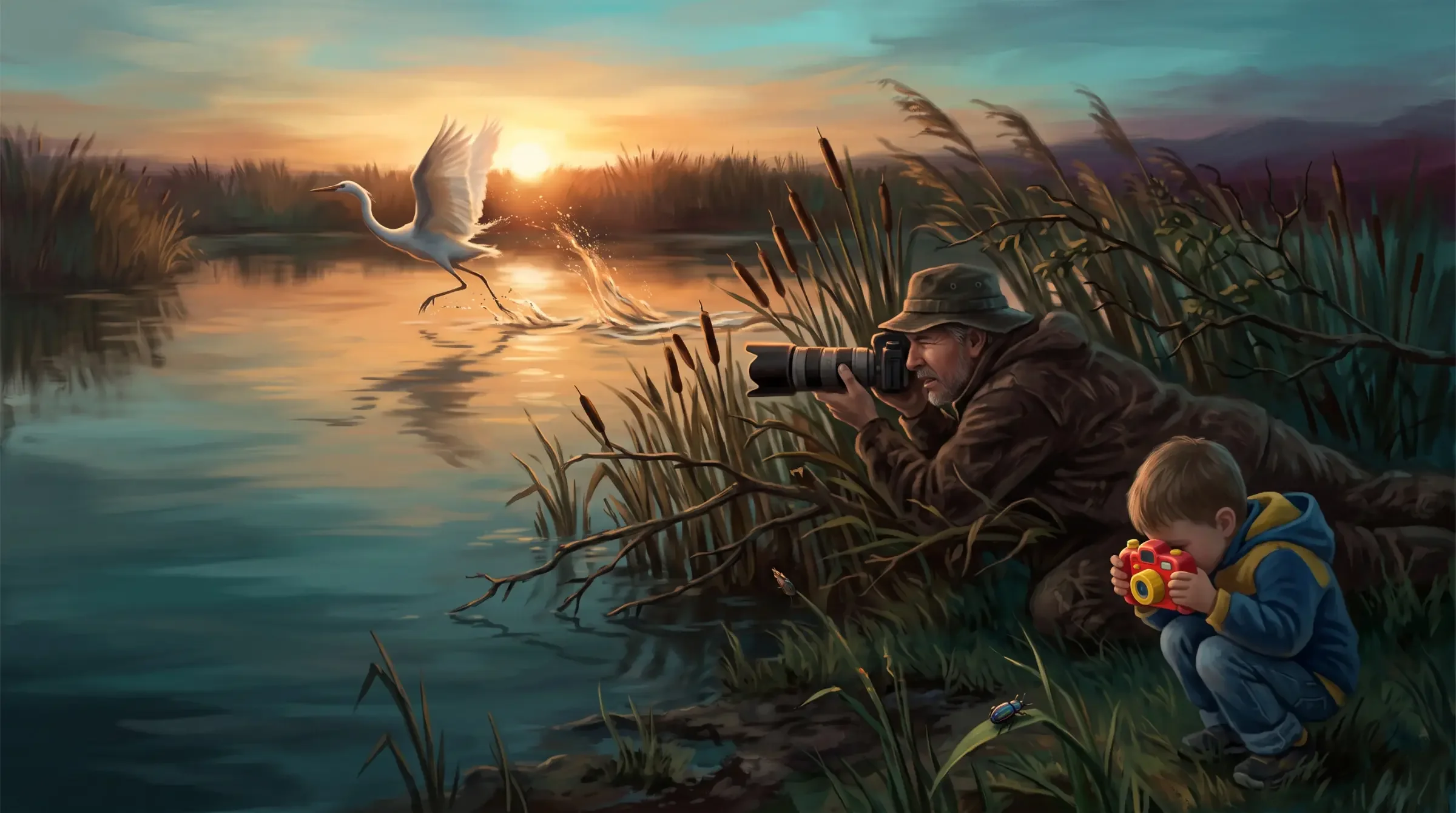
Just because a tool can be used in a low-effort way to make a low-quality product doesn’t mean all creators use it that way. And even those who do don’t deserve to be labelled and therefore become easy targets of the still-pervasive “witch hunts”. Those early efforts may be like a child with a toy camera and spark a lifelong interest and pursuit of a craft they never may have known they enjoyed otherwise.
AI-assisted or not, high or low effort, high- or low-skilled, every piece of content has a human behind it. We need tools and systems that are better at determining the intention of the piece and that value the human creator regardless of their tools. It’s time to focus on weeding out bad actors, not artists.
Because, regardless of the tools, all art is human art.