All Art is Human Art, Part 1: The Human In the Loop is Responsible
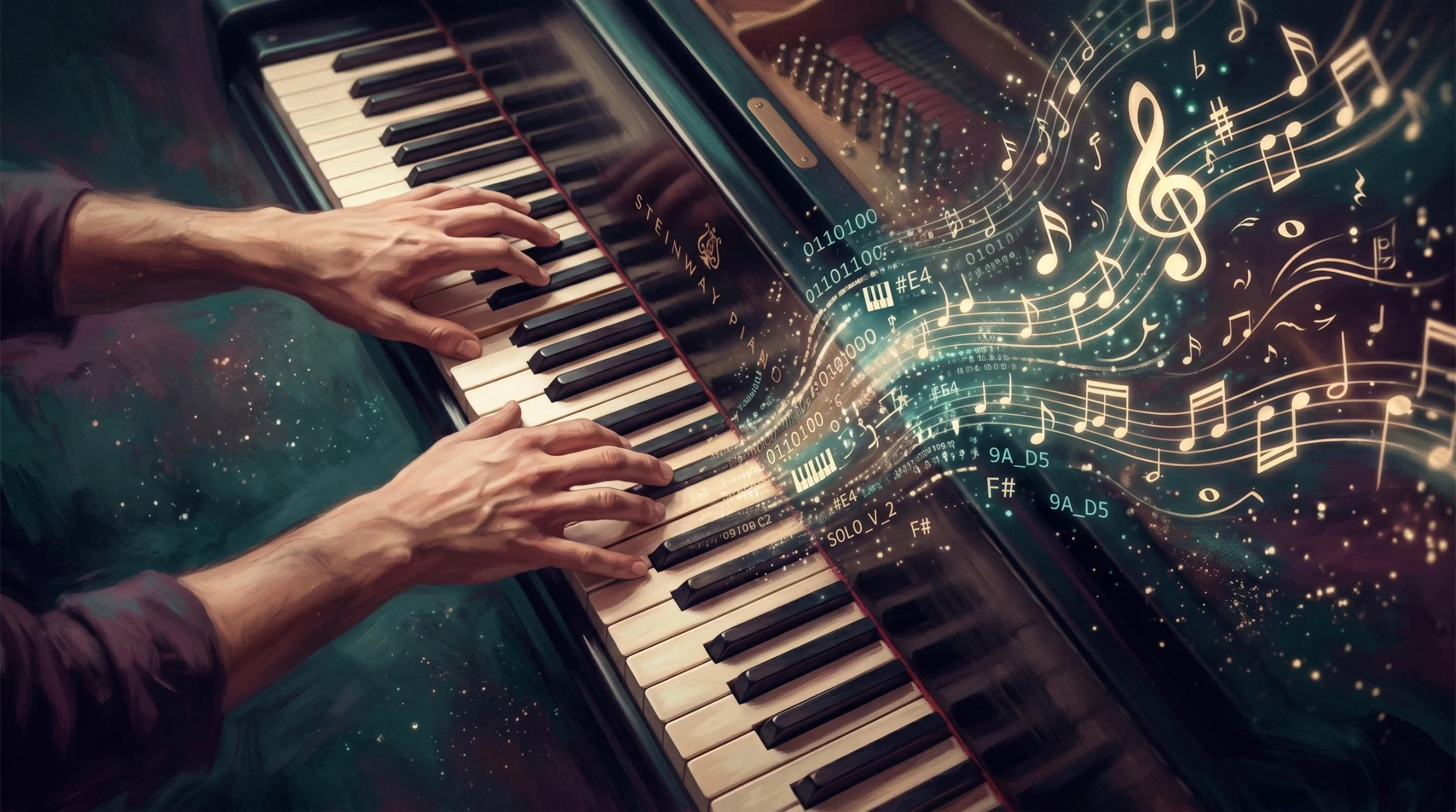
When I was in college, my major was Jazz Piano with a Composition Focus. Sadly, my local college didn’t offer songwriting in any genre, so this was as close as I could get to continuing my journey toward being a professional songwriter.*
I remember my composition instructor, a very accomplished composer herself, relaying in dire tones that experts or tech bros or someone were predicting that within ten or fifteen years, machine vocalists could be good enough to replace humans. She was one of those who said this like it would be the end of music. “Will they even need singers anymore?” (To be clear, I love her and respect her very much, and can understand why she felt threatened. I did too, at the time.)
That was twenty-eight years ago. So it took longer than she predicted, but here we are, in an age where some of the better music generation models create vocal performances that are indecipherable from humans except by some spectral analysis programs (and not even then, all the time), and are usually technically perfect and sound better than most human performers.
And has the music industry collapsed?
Well, not yet. But it is definitely changing. And how we view what makes an “artist” needs to change with it.
* And it was a fantastic step, no regrets. I was able to continue my songwriting education later through other means and sources, expanding on the excellent foundations I gained in college.
Music artists and the technological revolution
Since that conversation in 1998, the music industry has experienced several technology-driven revolutions. From Napster to subscription streaming, from bedroom producers to AI producers, we’ve seen one change after another. But while technological advances were enabling anyone with a laptop, some musical ability, and the willingness to learn Digital Audio Workstation (DAW) software to become album producers, there was still a limitation that kept the vocalist as the “artist” firmly in the centre of people’s minds—machines couldn’t sing.
Any vocalist will tell you their voice is an instrument. In some ways, it’s the most finicky and vulnerable one—other instruments can’t get career-halting nodes, don’t fluctuate with monthly hormonal shifts, and don’t change tone as they age. A pianist with a cold might still be able to pull off a half-decent performance. A vocalist will need to take heroic measures which may not work and might cause lasting damage, so the best choice is usually to reschedule.
Not only that, almost everyone has a voice. However, only a gifted few are blessed with a naturally angelic voice. A few more are able to achieve a pleasing tone through hard work and skill. But some, no matter how hard they work, will be stuck with voices that get the job done but won’t be filling stadiums anytime soon.
Yes, there’s a lot more to a successful artist’s career than just their voice—stage presence, business savvy, hard work, a thick skin, connections, and luck all play a part. And that’s how we get Taylor Swift, who also has the gift of being an exceptional songwriter.
But the point is, the vocalist on a track has long been synonymous with being the “artist”, regardless of how many contributors that track actually had or who wrote the song. (More on that in Part 3—yes, this is a three-part series. I had a lot to say about it.)
The prophecy comes true
Fast forward to today. AI music generators have removed the last sacred cow. Now a songwriter can sing a rough scratch track, feed it into an engine, and five minutes later have a fully produced version that frankly sounds better than what many indie producers were charging thousands for a few years ago.
And it isn’t only music. The machines write novels now. They produce video. They even produce the actors. I recently used Tunee.AI’s chat interface to make a music video for my upcoming song release. My ideas and direction drove the conversation, and the machine did all the heavy lifting on the footage. (And I got to feature my exact characters from my epic mermaid fantasy series. How cool is that?)
At last, my composition prof’s dire prediction has come true. We don’t need human singers anymore—at least, not for the same reasons we used to.
Which means we have to ask: who’s the artist now?
How I actually use AI
I’ll get this out of the way, because someone’s going to ask.
I’ve been a pianist and vocalist for most of my life. I performed my first duet with my mom at age four (the same age I started taking piano lessons). Started writing music and fiction at age nine. Piano and songwriting were my first loves, and stories were a close second—combining them? Best of both worlds.
One of my profound frustrations has always been my singing voice. I took voice lessons in my second year of college, learned from choir directors and a voice-major roommate-slash-bestie and every vocal professional I’ve been lucky enough to call a friend, and spent years leading worship.
I’ve come a long way with control, performance, and stage presence. But when it comes to singing, I’ve always known I don’t have the voice—meaning the tone—to be a successful vocalist. My voice is good enough to lead worship. It isn’t good enough that you’d want to listen to it on repeat.
(If you want to hear what I mean, I recently put up two versions of a country ballad I wrote called “You Made Me (Song for Mom)”—my best-performed and -produced vocal and the AI lead. Judge for yourself: “Why I Don’t Sing My Own Songs” on my Fireside blog. Free account required.)
So I use an AI vocalist. I write the song, produce the track, sing the scratch vocal myself, then hand the lead to a tool that can carry the tone I can’t. (Or collaborate with human singers—because yes, they absolutely still have a place!)
I use AI in my visual and music production work too. I’ve become a better designer, especially for book covers, and a better music producer for two reasons: having to learn how to fix AI mistakes, and because I can reverse-engineer an AI-generated output to understand how to create an effect with more traditional digital tools—instead of flailing around trying to invent something from scratch when I don’t even know what I’m reaching for. (Not to mention the fact I’d never be able to afford the human-created equivalent of the raw AI outputs to work from in the first place.)
And while I still produce the actual work, I use AI tools to assist in the two crafts I’d call my own (storytelling and songwriting) for brainstorming and editorial feedback. It points out weaknesses I didn’t know were there, catches me when I’m being lazy, and suggests the kinds of fixes a good human editor would. It also helps me clarify my own ideas as I go, the same way talking a problem through with a smart friend does.
(Be thankful you’re not wading through the word count I produced while I was figuring out what I really wanted to say in this post.)
The thing all of this has in common is me. There’s a skilled human in every one of those loops, making the decisions and doing the work the tool can’t.
All art is human art
To AI haters, those uses negate my human creativity and skill. Everything about my art becomes defined by one of many tools I’m using to empower my process. And they repeatedly label work like mine as “AI slop”.
Those haters have a fundamentally flawed understanding of what art is.
Art is the expression of a human idea. Anything that lets a human express an idea is a tool, not an artist.
A machine is not an artist, because we have not yet reached the point where machines spontaneously create expressions of ideas out of thoughts of their own.
So there is no such thing as an “AI artist.” AI-assisted artists, yes. AI-produced or AI-generated art, sure. But the bots are not artists. There must always be a human in the loop to make art.
And there’s a human fingerprint even further down than that. These models learned everything they know from human work—human paintings, human writing, human music. Strip the human expression out of the training and the machine has nothing to contribute, because it never had anything of its own to begin with.
The human is in the loop twice, then. Once as the creator directing the tool, and once as the vast body of human artists the tool was built from.*
Therefore, all art is human art.
Which also means a song or a novel isn’t “AI.” It can be AI-produced or AI-assisted, but it is not AI. “AI” stands for “artificial intelligence”—itself a misleading label for what the technology actually is—and no song, article, book, or video is intelligent, no matter how clever or high-minded its message.
* How that training was done, and whether artists consented to it, is a separate question from what I’m arguing here. And to be honest, it rarely stays focused on that issue for long. For the most committed critics, no answer will do. Tools trained entirely on licensed or public-domain work draw the same condemnation as any other. The objection stopped being about consent a while ago and became something closer to doctrine, and you can’t reason someone out of a position they didn’t reason themselves into.
Tools cut both ways
A kitchen knife can be used to chop the vegetables for dinner or it can be used to commit a crime. The knife doesn’t decide. The human holding it does, and the human is responsible for whichever it turns out to be.
AI is the same. It’s making it easier for good creators to make good work, and easier for bad actors to act badly. But the tool isn’t the one making the choice.
So let’s use language that puts responsibility where it belongs.
When a person uses these tools to write, produce, or design, they’re an artist employing AI tools. An AI-assisted author. Not an “AI author,” as though the software sat down and had something to say.
And when a person uses these same tools to churn out lookalike books to skim a hot genre, impersonate a legitimate author, flood a platform with junk, or run a phishing operation, they aren’t “AI” either. They’re scammers. Fraudsters. Content farms run by people.
The machine didn’t decide to deceive anyone. A human did.
We blame AI for the deepfakes, the bot accounts, the knock-off novels. But AI didn’t do any of that. People did, using a tool. Same as the knife.
And on the flip side, when it comes to meaningful creative work, the human is always the artist. Regardless of the tools they used.
(The AI companies agree, incidentally. Read the terms of service on any of these platforms and you’ll find the user is held responsible for the outputs and how they’re used, including any infringement on someone else’s intellectual property. The people who built the tools already know whose hands are on the knife.)
“We blame AI for the deepfakes, the bot accounts, the knock-off novels. But AI didn’t do any of that. People did, using a tool. And on the flip side, when it comes to meaningful creative work, the human is always the artist.”
The purity police
Since AI hit the mainstream, the folks who like to gatekeep the arts have had a whole new reason to go hunting. Has AI touched any part of this project? How much? And do they find that use “acceptable”?
I find this attitude exhausting, and I’ve said so at length before.* I’m not relitigating it here. But get enough of these zealots together and careers get ruined, and it’ll likely be a few more years before the tide shames the bullies back into their corner. Then they’ll go find some new socially acceptable way to pull the other lobsters back down into the pot.
The problem is that the moment a machine (and not any machine, but one particular kind) touches the arts, everyone erases the human. Opponents do it, and honestly, so do a lot of AI users. The tool gets the credit and the tool gets the blame, and the person who actually made the decisions vanishes from the story.
Put the human back where they belong, responsible for both the good and the harm, and we can start asking the harder questions.
Like what a piece of art is actually worth. And who deserves to get paid for it.
That’s where we’re headed next.
→ All Art is Human Art, Part 2: The Consumer Decides the Value
* See “Finding My Voice in the AI Wars,” February 2024.
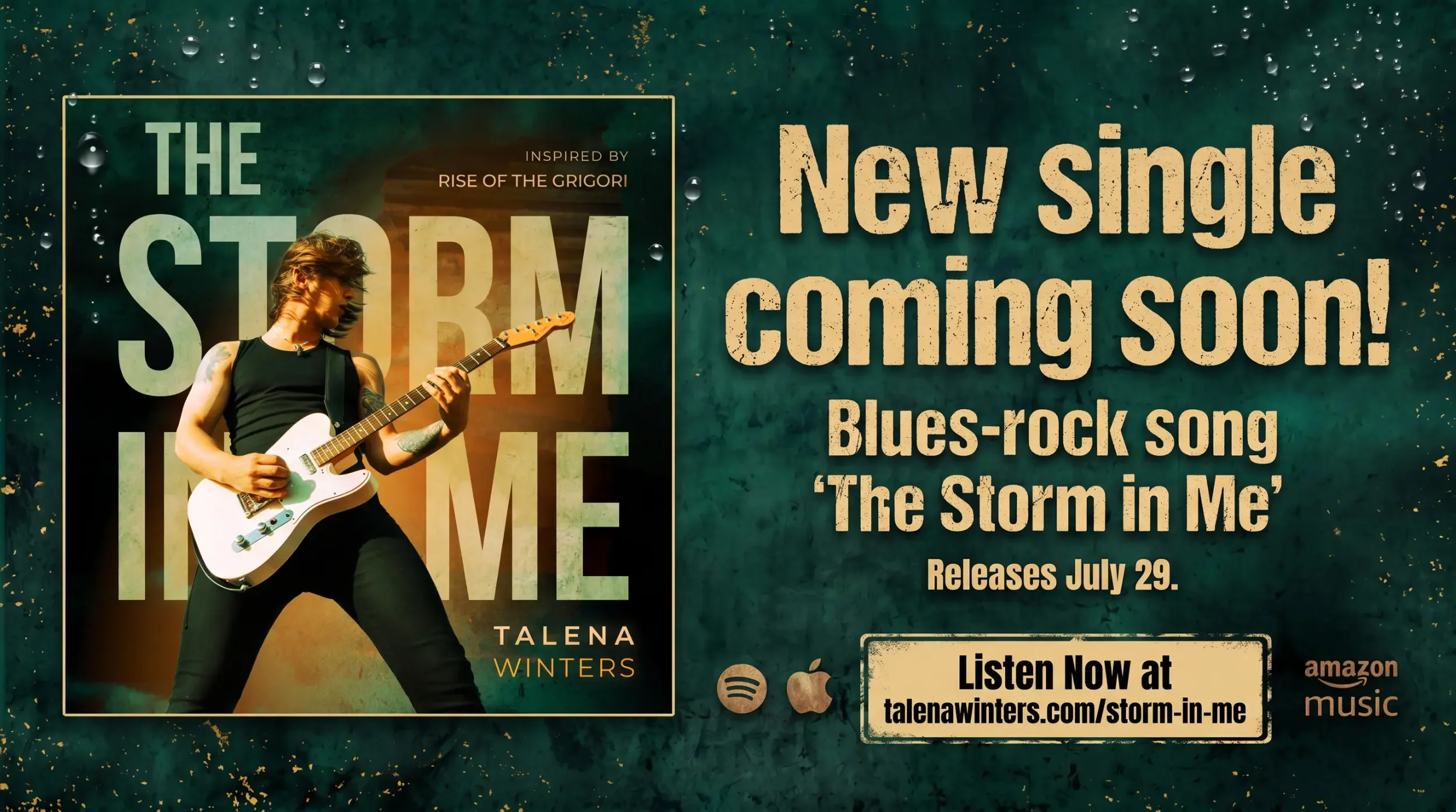
Check out my upcoming release!
Listen now on my Listening Room blog. Music video coming soon!