All Art Is Human Art, Part 2: The Consumer Decides the Value
In my last post, I argued that there’s no such thing as an AI artist, only humans using AI as a tool, and that those humans are responsible for what they make, good or bad. That all art is human art, regardless of the tools used to make it. Put the human back in the loop and we can explore another question.
Who decides what a piece of art actually worth? And does effort equate to value?
I know the answer to this. I don’t like it. But I’ve experienced the truth of it enough that I’ve come to accept it. And that truth is:
A piece of art is worth exactly what someone will pay for it. No more. And no matter how much of my heart, hours, or skill went into it, the buyer decides the price, and the value, not me.
Effort was never the measure
We like to believe effort and worth have a direct correlation. The harder you work, the more your work is worth. It’s a comforting idea. It’s also not how reality works.
“Because, capitalism,” you might shout, waving a futile fist at the sky. But this isn’t a new thing.
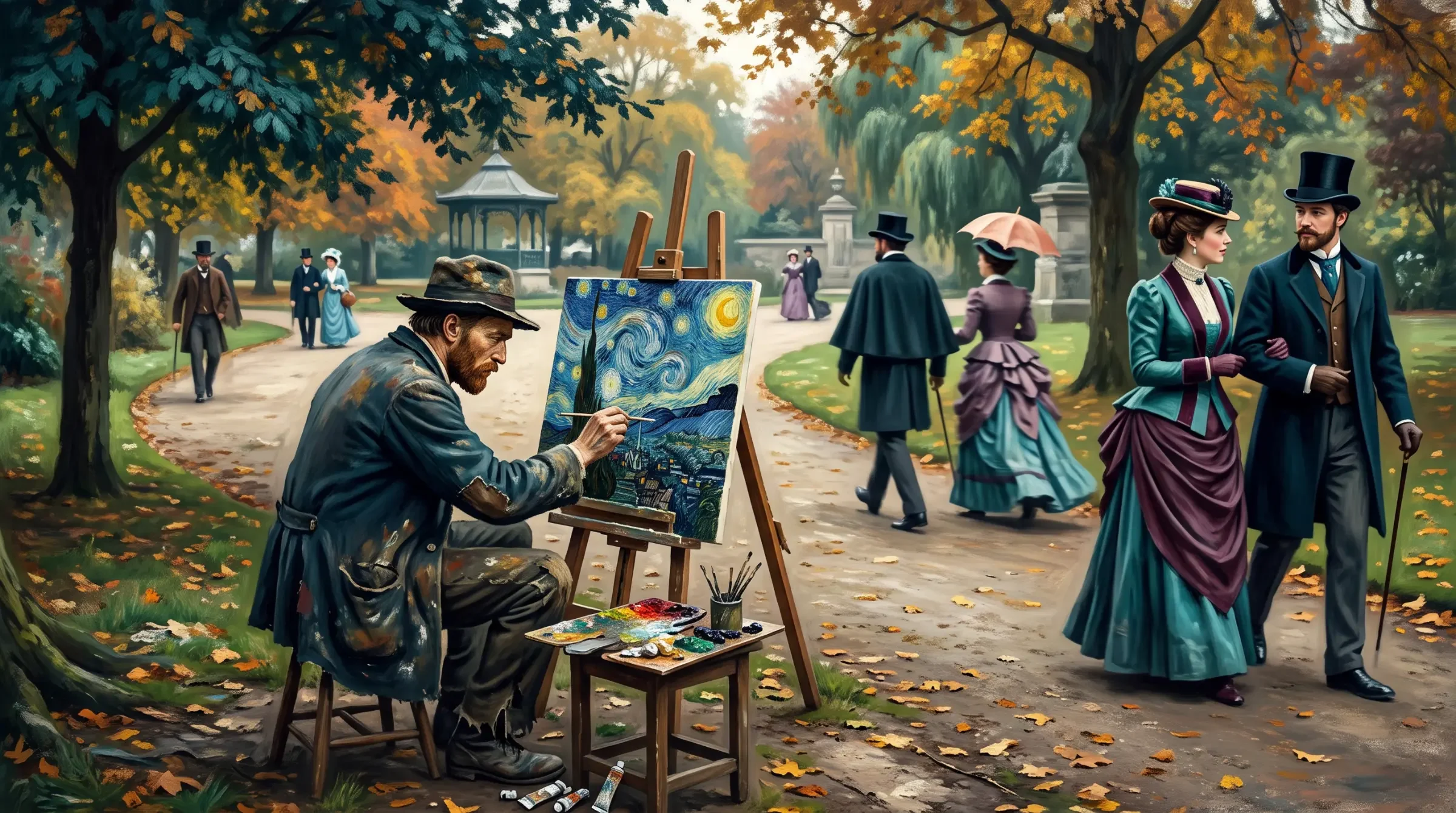
For example, we often think of the great masters painting every brushstroke of their masterpieces alone in a garret, half-starved for their art. But many of them, such as Rubens and Raphael, ran workshops, with teams of assistants taking the master’s initial sketches and putting them on the canvas according to their specialties—rough-in, shading, landscapes, drapery—while the accredited artist came in to add the final touches and sign their name.
Was that work less valuable because the master didn’t paint every stroke himself? Of course not. And was the work of some struggling contemporary with just as much skill, who sold his own teeth to buy paint and painted every stroke alone, somehow more valuable because he suffered for it?
Some people might say so, but ask the Van Goghs or Franz Schuberts of the world, who created prolifically in obscurity and got no acclaim until after their death. Suffering didn’t set their price. Time and attention did.
But it’s exactly the argument people make about AI. If it wasn’t hard, if you didn’t bleed for it, it doesn’t count.
Effort has never been the thing that sets the price. It just feels like it should be.
The confession
I am precious about my work. Not in the sense that I think it’s above criticism, but in the sense that I have a very hard time putting my name on anything that doesn’t authentically feel like me. If I’m not fully invested, I stall out, unable to move forward until I figure out how to get invested again.
This makes me a slow creator. My novels come out about every two years. I’m a prolific songwriter, but I have a backlog of unreleased songs sitting on my hard drive, waiting for me to polish and produce the final versions of the tracks. I don’t want to release work the detectors will read as “AI”, lumping my painstakingly crafted human skill and effort in with the low-effort, low-skill work of a content farm. So not only do I spend hours creating the song in the first place, I spend many, many more hours finishing it instead of releasing pure AI-produced demos, and that takes time. So much time.*
I’ve never published a novel where AI generated the prose, and I’m not sure I ever will—I’ve tried writing fiction with AI, and I’m never happy with the results.
Likewise, I write all my own lyrics. I usually write my own melodies and chords too. I choose the song structure, sound, and layer in my own human-played instruments.
The heart of what I make has to be mine, or I can’t sign it.
Meanwhile, I watch people running fully automated song- and novel-production operations pull in six figures a year, while my highly reviewed, painstakingly crafted work still doesn’t pay for itself. (Thankfully, no teeth have been sacrificed in the making of my art. A lot of other things, yes. But I’ve kept all my body parts intact.)
And the people using AI to mass-produce songs or novels aren’t wrong, either. They’re working smarter, not harder. The quality they’re producing is sufficient to satisfy consumer demand because creating good work using these systems takes a real knowledge of the craft—not to mention the tech. If I could manage it and still keep the “fully invested, deep and deliberate work” standards I expect of myself, I probably would, because I do enjoy eating and having a house to live in, and my husband would like to retire someday.
These factory-production creators** have found what a lot of consumers will happily pay for, and they’re supplying it. The consumer decided the value, and the consumer voted with their wallet.
It’s a tough pill to swallow. But it’s true.
* The ironic thing about all the extra work I put in is that the tools used to detect AI involvement aren’t reliable, but the current trend on music streaming platforms is to label anything that matches certain sonic patterns as AI automatically. This means mislabelling both AI-produced and 100% human-produced work, as well as human-crafted songs that used AI in the production process anywhere (hybrid production). So I’m doing extra work to protect the value of my human effort from a label, even though the primary reason I’m writing this series of essays is because I don’t think that label should be used for art. More on that below.
** I also want to point out that the vast majority of AI-assisted creators are not mass-producing work, and even those who are, and who are managing to produce work of a quality that pleases readers, are still heavily involved in the process. Content farms don’t care about the final output, only getting a few sales before their accounts are shut down. Fast-releasing AI-assisted artists are creating quantity, yes, but they want the quality to be good enough to enable a long-term income under a single pen name. They want repeat customers. There is a world of difference.
Attention is the currency
So if effort doesn’t necessarily equate to value, what does? And what does that mean for how creators should be paid?
In this modern society, where very little art is in a physical medium one can “own”, the true currency is attention.
When you pay your monthly fee to a subscription service, you’re not buying songs, books, or movies. You’re renting access, and then spending your attention on whatever you choose. Every subscriber pays the same price for that attention. Which means every stream amortizes out to roughly the same tiny fraction of a cent, whether the track behind it took five years and a full studio or five minutes and a text prompt.
The platform doesn’t know how hard you worked. It doesn’t care. It counts plays. Attention in, fractions of pennies out, and effort nowhere in the equation.
The same logic runs through book subscription services, where a page read pays the same whether it took an afternoon or a decade to write. The market pays for attention captured, not for suffering endured.
By the way, physical art products are also licensed. You don’t own the rights to the contents of a book or a CD or a DVD, just the right to do what you want with the packaging.
But someone can buy a lot more physical art than they can consume, so the value there isn’t based on how many people consume it (which is what streaming and subscription services pay out for), but by getting enough attention that people perceive actually owning the item as having the value. And, even if they want it, whether they buy it is decided by whether they have access to a physical copy and can afford it.
Rare items can have a higher perceived value because of their rarity. But even though the Mona Lisa might sell for millions or billions, most creators can’t generate that kind of value for their work until they’re dead. While alive, it’s a much more stable business model to have their work widely available and easily consumed by the masses.
This is why factory-produced art exists, and why it sells.
I have more than a few mass-produced prints hanging in my own home. They came from a big box store, they cost me almost nothing, and I enjoy them. Some people would call them slop.*
But are they? A human designed the original, and other humans made choices all along the way to get them onto my wall. They suit my budget and my taste. So they’re art. Cheap, widely appealing, low-effort art, but art.
The stuff that lets people make a living is rarely the highest-effort, highest-quality work. It’s usually whatever is fastest to produce, cheapest to make, and widest in appeal—same as every other product on every other shelf.
And that’s fine. Don’t yuck someone else’s yum. Just because you find Fruit Love Island to be in questionable taste doesn’t mean it isn’t exactly what someone needs to get through their day. Finding out whether the banana and the papaya finally hook up might be the highlight of somebody’s week, and who am I to sneer at that?
* “Slop” is a word I’ve come to detest. It nearly always tells you more about the critic than about the work or the person who made it. As though by thinking very highly of themselves and either their abilities or taste, they are somehow better than other people. But we’re all just people who like different things. And that makes us interesting, not worth less.
The consumer isn’t the villain here
If I stopped there, this would be a bleak little essay. Work hard, make something true, watch it lose to the fast and the cheap, the end.
But consumers deciding the value isn’t the enemy of art. In fact, it might be the very thing that saves it.
Right now, there is a well-established movement to label anything as “AI” if AI was involved in any way. But whom does that serve?
Yes, people who care about AI use really care. But increasingly, most people do not. They want to consume something that makes them feel the way they want to feel, no matter what tools were used to produce it.
And what about the people in the middle? The ones who don’t really understand AI except some vague (and overblown) arguments that it’s killing the planet, who don’t want to draw the ire of the tar-and-pitchforks crowd, and who may see an AI label as a reason for suspicion without any valid reason to do so?
The real thing holding back AI-assisted work is the label and the gatekeeping that stop consumers from ever encountering it on fair terms. Humans are just as capable of creating “slop” without AI tools as with them. (In fact, it’s easier without—there’s a reason AI has been such a game-changer for many creators.) Slap “AI” on a track that represents a hundred hours of human craft, and you’ve told the buyer to sneer before they’ve even listened. The market never gets to weigh in.
What the label really does is provide fodder for the witch-hunters. In addition, it perpetuates the idea that using this particular tool diminishes the value of the art—partly because people still blame the AI for the work, as if the tool were the one responsible (which we covered in Part 1).
Someone put a thumb on the scale before the buyer could decide.
We’ve seen what happens when the thumb comes off. For years, publishing industry surveys have wrung their hands about the shrinking income of authors—traditionally published authors, that is, because those surveys rarely think to ask the indies. And advances keep dropping to genuinely embarrassing amounts. Meanwhile, indie authors selling directly to readers are building six-figure careers, because readers, given the chance to choose and pay directly, decided that work was worth more than the gatekeepers ever did. A similar phenomenon is happening in the music industry.
The old system undervalued that art, seeing the creator as the serf they could exploit and profit from. The consumer set those creators free.
The slow way
I’ve made my peace with being the slow one. Mostly.
My way is the slow way—the deeply invested, won’t-ship-it-until-it’s-truly-mine way. And it’s probably also the way that stands the test of time.
Think of the Victorians. The penny dreadfuls and pulp serials of the 1800s were the Fruit Love Island of their day. They paid the bills, they flew off the racks, and almost every one of them is now lost to history, their authors’ names gone with them. But we still read Victor Hugo.
I’d love to be more like Charles Dickens. He wrote prolifically and serially, cranking out instalments for magazines that kept food on the table, while still producing work we celebrate nearly two centuries later. Prolific and enduring. Fast enough and widely appealing enough to pay the bills, good enough to last.
I haven’t managed it yet. But I’m still trying, and I’ll keep trying with whatever tools I have on hand. Because I know that the tools we use aren’t what decides the quality of our art. I’ll happily reduce the effort required to produce good work if I can ever find a way—even if my particular brain’s needs mean I’m more likely to use those tools for gaining the attention for my work, not the work itself. Even knowing that the effort we put in doesn’t decide the value, creating my work is where I want to expend my calories.
In the end, I want to be proud of what I make. History won’t care if a piece of art was created using AI tools or not. What consumers care about is if something stirs their soul.
And that’s what I want to create. Something that makes you feel things, both for now, and for generations to come. And I hope you continue to find value in that, dear reader.
Coming next
So the consumer decides how big the pie is. Fine. But if the consumer’s attention decides the value, how should the creator be paid?
That’s Part 3.
Have you ever loved something, then found out how it was made and felt differently? Let me know in the comments. I’d love to hear your perspective!
My New Single Drops Next Week
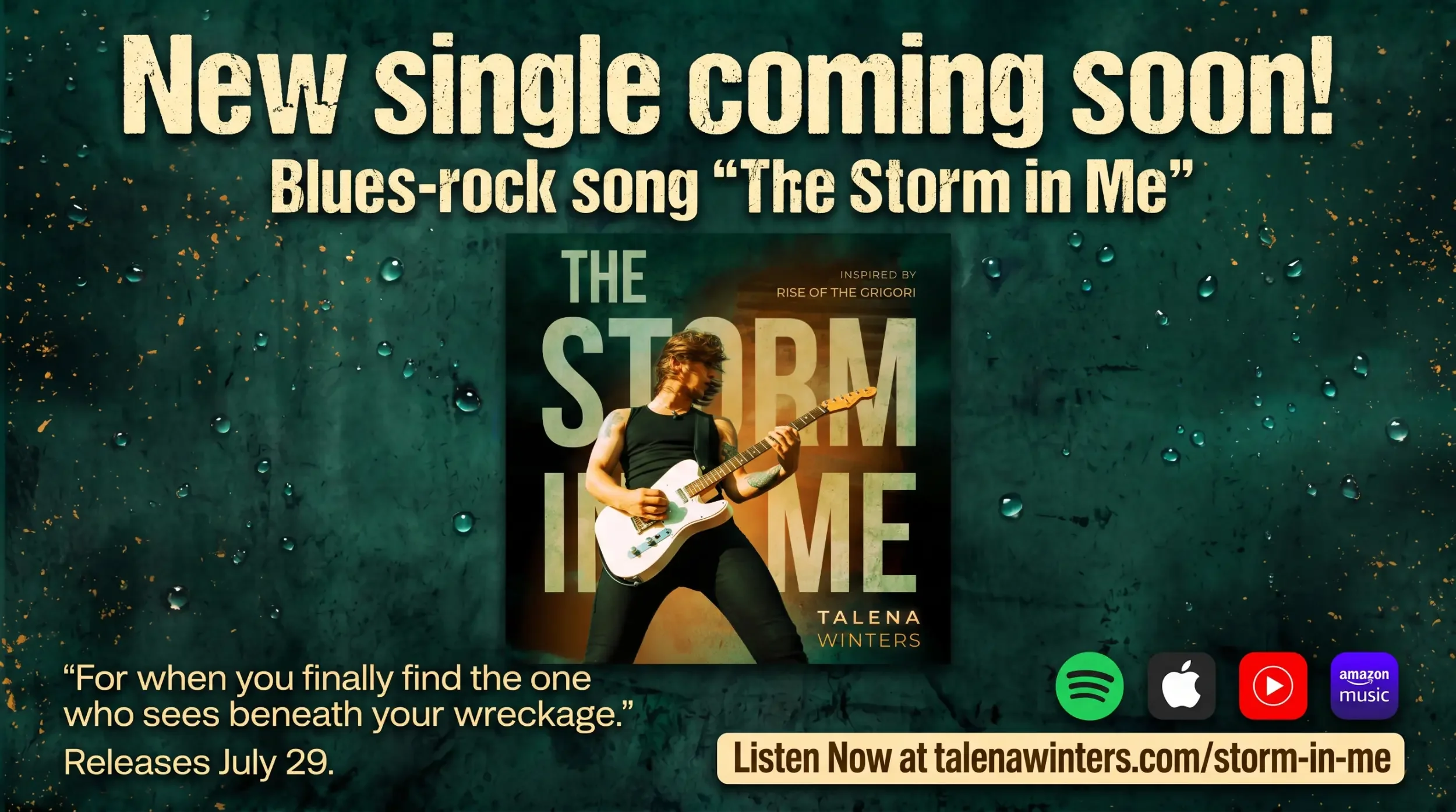
The video is done. The teasers are scheduled. This is the most I’ve ever done for a song release, and, frankly, I’m exhausted. I’m not much of a burst-of-launch-energy girl.
But it’s worth it. I’m soooo in love with this song and video.
About the song:
“The Storm in Me” is a raw, emotionally charged blues-rock song inspired by Zale, the tortured merman hero of my epic fantasy series, Rise of the Grigori. Anyone who's found the one person who sees past their demons will feel this one.
Want a teaser for the new music video?