
The Author Alchemist Blog
Turn your words into gold.
Log Lines, Taglines, Hooks & More: The Essential One-Line Tools Every Author Needs
Learn the difference between premise lines, log lines, taglines, hooks, and headlines—and how to use each to pitch, market, and sell your story. With clear examples from existing and hypothetical hits, this guide helps authors master the one-line tools every story needs.
Nail Your Log Line, Hook Your Reader
Learn how to write a strong log line that captures your story in one sentence and how to use it to pitch your book. Plus, get details on my upcoming log line workshop for writers.
The Unbreakable Promise: Hooking Readers through Expectations
In this first post in the “Strong Beginnings” series, we’ll explore the promises made in a compelling first act that engross your reader so completely they don’t stop reading until they get all the way to the satisfying conclusion of your story.
The Plotting Dilemma: Making Story Structure Work for You
The beautiful thing about the structure of the Flexible Writer’s Framework is that you can apply it at any stage of your writing process—which makes it perfect for pantsers and plotters alike. Learn how it works in this post.
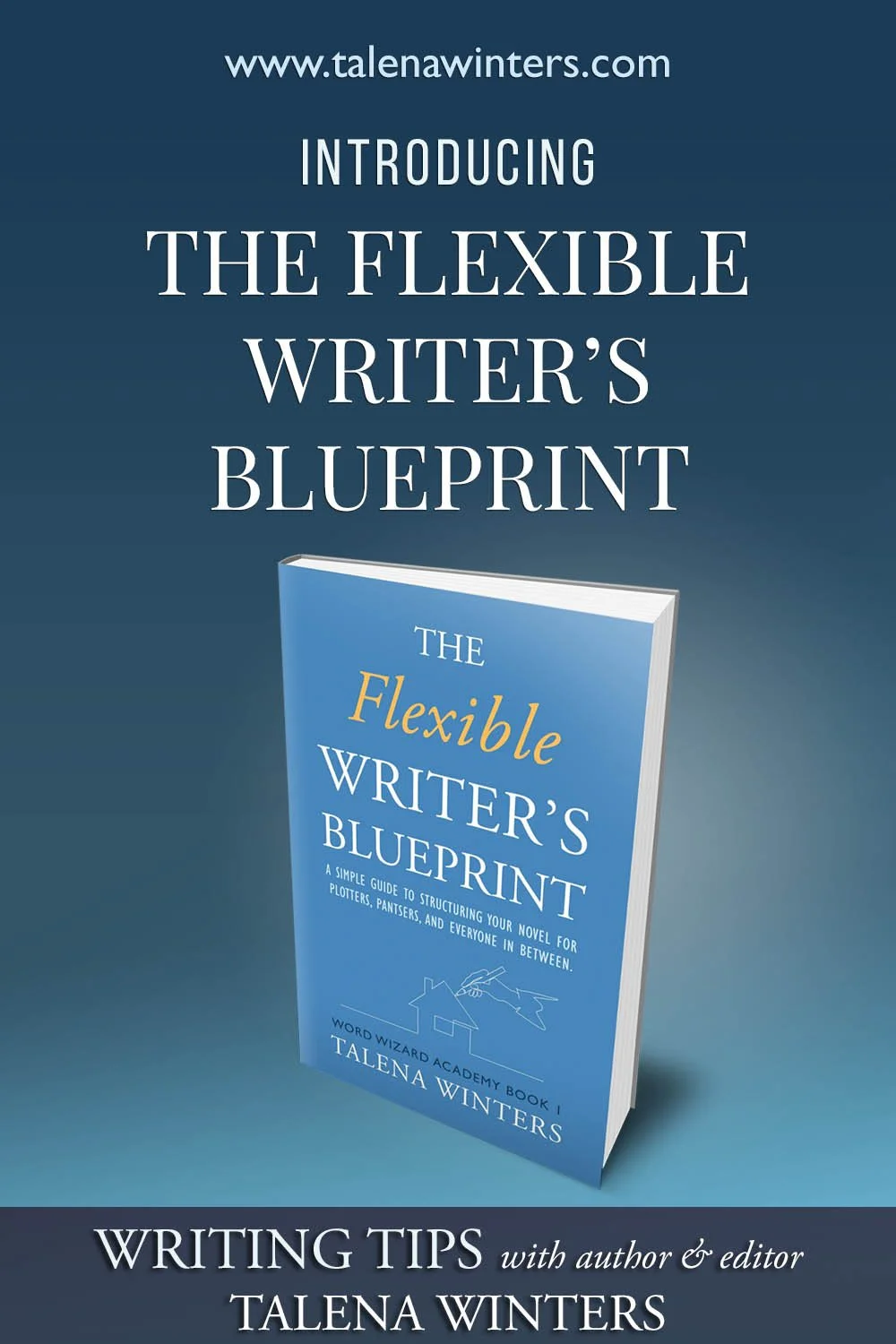
Introducing The Flexible Writer’s Blueprint Book
A brief introduction to my upcoming book for writers, The Flexible Writer's Blueprint: How to Structure Your Novel for Plotters, Pantsers, and Everyone In Between and how you can get early access and get your questions answered now.
Make It Count: Weed Out Crutch Words for Stronger Fiction Writing
Crutch words are filler words that, if they were removed, wouldn’t affect the meaning of a sentence at all—and might actually improve it. Learn to spot common culprits in this post.

Adverbs: The Devil of Fiction Writing?
Adverbs are often demonized carte blanche in popular writing advice. But should they be? Are there ever instances where using an adverb is the right decision?
May I Offer You a Conflict Sandwich?
Balancing descriptive details with a compelling narrative can be tricky. Use this Conflict Sandwich recipe to help you make a pièce de résistance.
How to Write Satisfying Scenes
Many writers struggle with knowing how to make a scene relevant to their story or make it move the story conflict forward in a satisfying, compelling way. Read this for some pointers to help fix your own sagging scenes.
Setting the Stage: Draw Readers in through Descriptive Details
There is a fine balance between giving enough descriptive details to allow the reader to be visually grounded in a scene and the dreaded info-dump—piles of description that are completely unrelated to plot or action. In this post, I talk about the most engaging ways to include description in your writing and suck your readers into your world with the force of a hurricane that they are begging not to release them.
Facing the Lie: Plotting from your Character's Defining Moment
The point in your plot known as the “Black Moment” might occur in the last third of your story, but it’s one of the best places to start plotting, because it defines not only your character, but also what your story is actually about. Read this post to find out why.
Troubleshooting Plot Problems with the Log Line
An appropriately-crafted log line may not be a magic wand to fix plot problems, but it comes close. Check out these three common causes for “project flame-out” to help you fix your story.
Your Story in a Single Sentence Part 2: The Elevator Pitch
As an author, you will be in multiple situations where you have the opportunity to get someone interested in your book in a very short window of time. That’s when you need an Elevator Pitch. Here’s how to make one.
Your Story in a Single Sentence Part 1: The Log Line
Creating a log line before you begin drafting (or even after!) lets you see whether you have a story that will carry a novel or help you flesh out an idea into something that will. Use this simple plot structure device to make sure you have a story worth telling.
Conflict: The Engine that Drives Page-Turning Writing
Most of us avoid conflict at all costs, but conflict in all its forms is the beating heart of great fiction. In this post, I give you simple tips on how to infuse more conflict into your writing.